
By the team who’ve seen more sad rooftops than we care to count.
Let’s be honest — nobody wakes up on a Sunday morning, sips their flat white, and thinks “crikey, I’d love to sort out my roof today.” It’s the kind of thing Aussies quietly ignore until a stain appears on the ceiling, or the neighbour’s kid casually mentions your tiles look like they’ve given up on life.
But here’s the thing: your roof is doing heavy lifting every single day. The Central Coast sun is brutal. The salt air from the ocean doesn’t mess around. And when La Niña decides to hang around, the rain turns even a minor crack into a full-blown indoor water feature. By the time most homeowners pick up the phone, a job that could’ve been a quick fix has turned into a very expensive headache.
So let’s fix that. This is everything you actually need to know about roofing on the Central Coast — the what, the why, the how, and the “why on earth didn’t I do this sooner.”
Why Central Coast Roofs Age Faster Than You Think
If you’ve lived here long enough, you already know: this isn’t your average Australian suburb. The Central Coast sits in a sweet spot of coastal humidity, UV intensity, and seasonal storm activity that absolutely hammers roofing materials — especially older cement tiles.
Most homes built between the 1970s and early 2000s are sitting on cement tile roofs that are now well past their maintenance window. Cement tiles are porous by nature. Over time, they absorb moisture, grow moss and lichen, and start to lose their structural integrity — particularly around the ridge capping, where the mortar cracks, crumbles, and eventually lets water sneak in.
Add to that:
- Salt air corrosion from the Pacific pushing inland across suburbs like Terrigal, Avoca Beach, Bateau Bay and The Entrance
- UV degradation that strips colour and sealer from tile surfaces faster than anywhere inland
- Storm surges that shake loose pointing and dislodge tiles during east coast lows
- Lichen and algae growth that holds moisture against tile surfaces and accelerates decay
By the time you see water stains on your ceiling, the damage has usually been building for two to three years. The roof doesn’t fail overnight — it fails quietly, slowly, and then all at once at the worst possible time.
That’s why proactive roof maintenance on the Central Coast isn’t just a “nice to have.” It’s genuinely the difference between a $3,000 restoration and a $30,000 re-roof.
What’s Actually Wrong With Your Roof? The Honest Checklist
Before you do anything, it helps to know what you’re dealing with. Here’s what local roofing experts on the Central Coast typically find during a proper roof inspection:
For cement and terracotta tile roofs:
- Cracked or slipped tiles (often invisible from the ground)
- Crumbling ridge capping mortar — this is the #1 cause of leaks
- Loose or lifted pointing along hip and ridge lines
- Heavy moss, lichen and algae buildup
- Blocked or sagging gutters and downpipes
- Rusted or cracked valley flashings
- Faded or peeling tile paint from previous restorations
For metal and Colorbond roofs:
- Surface rust developing at cut edges or fastener points
- Loose or lifting sheets from wind events
- Deteriorated sealants around penetrations and flashings
- Dented panels from hail or debris
- Failing gutters and fascia boards
The key insight here? Most of these issues are fixable without replacing the entire roof — if you catch them early enough. That’s where a proper roof repair specialist on the Central Coast earns their keep: knowing which problems need a patch, which need a full restoration, and which genuinely require a new roof.
The Roof Restoration Process — Step by Step (No Waffle)
A quality cement tile roof restoration isn’t just a quick spray and pray. When done properly, it’s a methodical process that extends your roof’s life by 10–15 years. Here’s what it actually involves:
Step 1: Full Roof Inspection
A licensed tradesperson gets up there — not just eyeballs from the ground — and assesses every tile, every ridge cap, every valley, and every gutter. They’re checking for structural issues, hidden cracking, moisture damage, and anything that could cause a leak down the line.
Step 2: High-Pressure Roof Cleaning
This is where it starts looking dramatic. Industrial pressure cleaning strips decades of moss, lichen, algae, dirt, and old flaking paint off the tile surface. You’ll see streaks of green running down your driveway and think it looks like a crime scene — that’s normal. It’s also why a professional roof pressure cleaning service matters: doing it wrong (wrong pressure, wrong angles) can crack tiles or force water under ridgelines.
Step 3: Tile Replacement and Repairs
Any broken, cracked, or slipped tiles are replaced. Ridge capping is re-bedded and re-pointed using flexible polymer-modified compounds — not the old sand/cement mix that cracks in five years. Valley flashings are inspected and replaced where needed.
Step 4: Re-Bedding and Re-Pointing Ridge Caps
This is the most structurally critical part of the job. The ridge caps along the apex and hips of your roof are what seal the entire structure. Old-school hard mortar pointing cracks with thermal movement. Modern flex-point compounds move with the roof and last dramatically longer.
Step 5: Sealer and Primer Application
A quality heat-resistant primer is applied to the clean, repaired tile surface. This is what allows the topcoat to bond properly — skip this step and your roof paint will peel within a couple of years. Some operators do skip it. That’s worth asking about when you get quotes.
Step 6: Two Coats of Roof Paint/Membrane
Quality roof coatings — applied in two full coats — restore colour, seal the tile surface against moisture absorption, and provide UV protection. The best products are Australian-made and formulated specifically for the coastal climate. Want to see what colour your roof could look like before committing? Try the Bass colour picker tool — it’s genuinely useful.
Step 7: Cleanup and Walkthrough
Gutters are cleared, paths are washed down, and the tradesperson walks you through what was done. Job complete.
A full cement tile roof restoration on the Central Coast typically takes two to three days depending on roof size, pitch, and weather.
Why You Should Seriously Consider Going Colorbond
Here’s a conversation that happens a lot on the Central Coast: a homeowner calls for a quote on restoring their ageing cement tiles, and the honest answer turns out to be “this roof has had three restorations already — you’d be better off replacing it.”
Enter Colorbond metal roofing.
Colorbond has become the roofing material of choice for coastal Australian homes — and for very good reason. It’s:
- Corrosion-resistant — specifically engineered to handle salt air environments
- Lightweight — easier on the structure of your home than heavy tile
- Low maintenance — no moss, no lichen, no re-pointing, no repainting for decades
- Energy efficient — reflects heat rather than absorbing it, keeping your home cooler in summer
- Wind resistant — performs significantly better in storm conditions than tile
There are 22 standard Colorbond colours available, from the iconic Surfmist and Woodland Grey through to deeper tones like Monument and Night Sky. Matching the colour to your fascia, gutters, and exterior palette makes a massive difference to street appeal — and adds real value to your property.
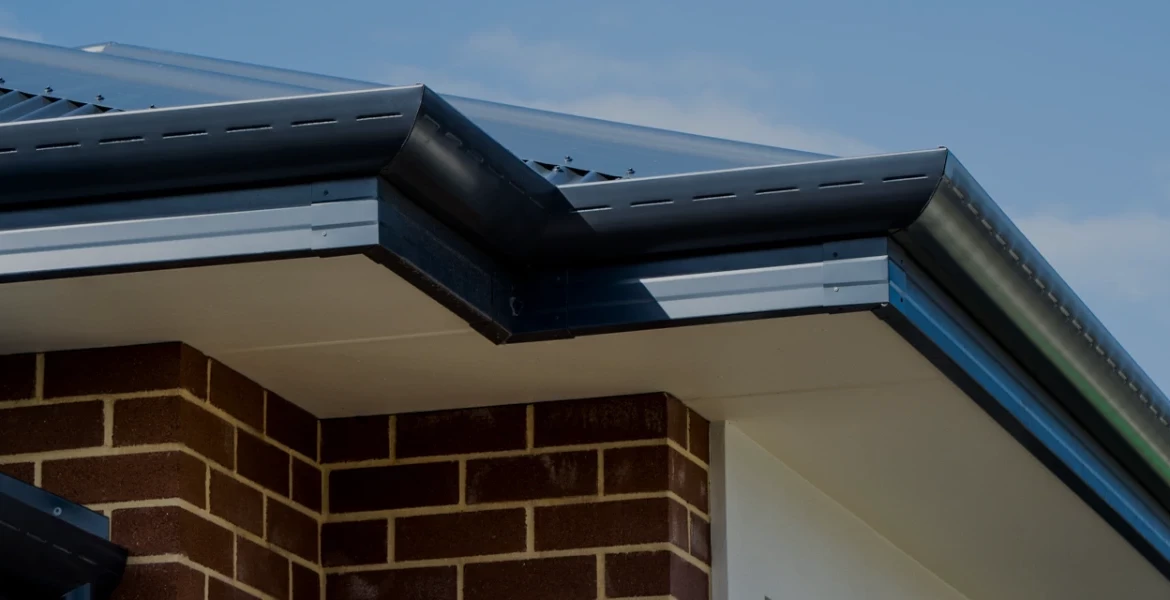
A Colorbond upgrade also gives you the chance to sort out your fascias and gutters at the same time — replacing tired timber fascias with Colorbond-matched aluminium or steel covers, upgrading to quad gutters, and fitting gutter guards to stop leaves and debris causing blockages.
The Gutter Problem Nobody Talks About Enough
Blocked gutters are one of the leading causes of roof and ceiling damage in Australian homes — and on the Central Coast, with the surrounding bushland, leaf debris is a constant issue.
When gutters block up, water backs up under the roof edge, saturates the fascia, and eventually finds its way inside. Over winter, this can cause significant mould issues in ceiling cavities. In summer, backed-up water against the fascia attracts termites.
Professional gutter replacement and installation isn’t just about aesthetics — it’s a core part of keeping your home watertight. Properly installed quad or half-round gutters with correctly pitched downpipes move water away from your home’s structure efficiently. Pair them with a quality leaf guard system and you’re looking at virtually zero maintenance for years.
Tile Roof Painting — Is It Worth It?
Short answer: yes, absolutely — if done properly.
Tile roof painting on the Central Coast serves two purposes: aesthetic and protective. A freshly painted roof looks like a brand new one (genuinely — neighbours will ask if you replaced it). But more importantly, quality roof coatings re-seal the tile surface, preventing moisture absorption that causes tiles to deteriorate from the inside out.
The key is in the product. Premium Australian-formulated roof coatings are designed to flex with thermal movement, resist UV fade, and withstand the coastal humidity cycle. Two coats minimum — some roofs in poor condition benefit from three.
Avoid anyone who offers a one-coat job at a suspiciously low price. The primer bond and the second topcoat are where the longevity comes from. Cut corners there and you’ll be calling someone again in three years.
Metal Roof Repairs — When and Why
Colorbond and metal roofs are generally low-maintenance, but they’re not zero-maintenance. The most common issues that bring homeowners to call for metal roof repairs on the Central Coast include:
Screw and fastener failures — Over time, the rubber seals on roofing screws degrade, allowing water ingress at penetration points. This is an easy fix when caught early, and a nasty ceiling stain when ignored.
Flashing and sealant failure — Around skylights, vents, whirlybirds, and chimney penetrations, sealants and flashings eventually crack and lift. Any penetration in a roof is a potential leak point.
Panel rust and corrosion — Particularly on older Zincalume and pre-ZINCALUME® galvanised iron roofs, surface rust at cut edges or damaged areas spreads if untreated. Rust-converting treatments and sealing can arrest this before it becomes structural.
Hail and storm damage — East coast low pressure systems on the Central Coast can deliver significant hail events. Dented panels aren’t always a structural issue, but damaged coatings and split seams absolutely are.
The right approach is to get these assessed by a qualified tradesperson, not patch-and-hope. A proper inspection costs you nothing with Bass Roof Restoration — and the peace of mind is worth a great deal more.
How Bass Roof Restoration Does Things Differently
There are quite a few roofing operators on the Central Coast. Some are excellent. Some are… less so. Here’s what separates the good ones from the rest — and why locals keep calling Bass Roof Restoration.
They’re genuinely local. Based at The Entrance and operating across the entire Central Coast — Gosford, Wyong, Terrigal, Woy Woy, Bateau Bay, Toukley, and everywhere in between — these are people who live and work in the same community as their customers. Your reputation travels fast in a regional area. Dodgy work gets around.
Over 20 years of industry experience. That’s not a figure plucked from thin air — it’s two decades of understanding how Central Coast weather affects roofing materials, how coastal salt air accelerates corrosion, and which products actually last in this specific environment.
A 12-year workmanship warranty. That’s longer than most competitors offer, and it tells you something about the confidence they have in their process and materials.
Licensed, fully insured, and safety compliant. This matters more than people realise. An unlicensed operator on your roof creates liability issues for you as the homeowner if something goes wrong.
Full service — one team, one job. From complete roof restoration and repairs through to Colorbond upgrades, gutter systems, pressure cleaning, and tile painting — you don’t need to coordinate multiple trades. It’s all handled.
Want to see actual finished work before you commit? The project portfolio is worth a look — before and after photos from real Central Coast jobs, not stock images.
When to Call — And Why Sooner Is Always Better
Here’s the simple version:
Call immediately if you notice: Water stains or damp patches on your ceiling, visible cracked or missing tiles, moss growing around ridge capping, gutters overflowing despite recent cleaning, or sagging anywhere in your roofline.
Call within a season if you notice: Visible fading or flaking on tile coating, dark streaking on tiles from algae, tiles that sound hollow when tapped, or gutters that are rusty or pulling away from the fascia.
Call for a routine check every 5–7 years even if you can’t see obvious problems — particularly on cement tile roofs over 20 years old and any roof that’s had previous restoration work.
The Central Coast’s coastal conditions are genuinely tough on roofing materials. The homeowners who never have roofing emergencies are the ones who treat their roof like the rest of their home: with a bit of regular care rather than complete neglect until something breaks.
Your roof has been quietly looking after you for years. Give it a bit of attention back.
Frequently Asked Questions
How much does a roof restoration cost on the Central Coast? It varies depending on roof size, pitch, material, and the extent of repairs needed. A single-storey home with a standard cement tile roof generally falls in the $3,500–$8,000 range for a full restoration. The only way to get an accurate figure is a proper on-site inspection — get a free quote from Bass Roof Restoration and you’ll know exactly where you stand.
How long does a roof restoration take? Most residential restorations take two to three days. Larger homes, steeper pitches, or significant repair work can extend this. Weather is always a factor — roof painting in particular requires dry conditions for proper curing.
Will a roof restoration add value to my home? Yes — considerably. A restored roof is one of the highest-return improvements you can make to a property’s street appeal and buyer confidence. A fresh tile paint job and clean guttering can make a home look 15 years newer at a fraction of the cost of a full replacement.
Can you restore a roof that’s already been painted before? Yes, in most cases — as long as the tiles themselves are still structurally sound. The previous coating is cleaned off during pressure washing, and fresh primer ensures proper adhesion for the new coatings. Roofs that have had multiple restorations over many decades may eventually reach the point where replacement makes more economic sense — that’s a conversation worth having honestly during an inspection.
Do you service my suburb? If you’re on the Central Coast or surrounds — yes. The team covers the full region from Woy Woy to Budgewoi, Gosford to The Entrance, and out to Mangrove Mountain and Somersby. Give them a ring on 0450 504 952 or check out the full range of roofing services available.
Bass Roof Restoration — family owned, Central Coast based, 20+ years experience. Licensed, insured, and genuinely invested in doing the job right.
Call 0450 504 952 or visit bassroofrestoration.com.au for a free, no-obligation quote.