
If your roof could talk, it wouldn’t be complaining about the view (fair enough, it’s got the best seat in the house from Terrigal to Toukley). It’d be complaining about you — specifically, about being ignored for the last ten years while you fussed over the kitchen splashback and the new outdoor setting.
Here’s an uncomfortable truth: the Central Coast is gorgeous, but it’s also brutal on roofs. Salt air rolling in off the coast, blazing UV that doesn’t muck around, and the kind of storm season that makes the six o’clock news every summer — your roof cops all of it, all year round, while you’re inside enjoying the ducted air con it’s supposedly protecting. So it seems only fair that once a year, or at the very least once you notice something’s gone a bit pear-shaped up there, your roof gets some attention back.
That’s where we come in. Bass Roof Restoration has spent two decades crawling around Central Coast rooftops so you don’t have to, and in this guide we’re going to walk you through exactly why local roofs age the way they do, what to actually look for, and how a proper restoration (not a quick fluff-and-buff job) can add fifteen-plus years to a roof that might otherwise be heading for an expensive full replacement.
Grab a cuppa. This one’s worth the read.
Why Central Coast Roofs Age Faster than You’d Like
Every region has its own roofing horror stories. Out west it’s heat and dust. Down south it’s frost and hail. Here on the Coast, it’s a three-pronged attack:
Salt-laden air. Anywhere within a few kilometres of the water — think Terrigal, Avoca, The Entrance, Umina, Copacabana — cops airborne salt that corrodes metal fixings, eats away at old paint coatings, and speeds up the breakdown of mortar on ridge capping. Even homes further inland around Erina, Wyoming and Narara aren’t fully off the hook; the salt still travels.
Relentless UV. Australian sun is no joke, and roofs face it head-on all day, every day. UV breaks down protective coatings, dries out old sealants, and turns once-flexible pointing into something closer to biscuit crumbs.
Storm season. Every summer the Coast gets its fair share of east coast lows, hail, and wind gusts that love nothing more than lifting a loose ridge cap or flicking a cracked tile clean off. Add heavy tree cover in suburbs like Ourimbah, Kincumber and Springfield, and you’ve got roofs collecting leaf litter, holding moisture, and growing moss like it’s a competitive sport.
Put all that together and you get roofs that look tired well before their time — even when the underlying structure is perfectly sound. Good news: sound structure plus a proper restoration is a winning combination, and it’s usually a fraction of the cost of a full re-roof.
The Tell-Tale Signs Your Roof Is Waving a White Flag
You don’t need to be a tradie to spot the warning signs. Here’s what to keep an eye out for next time you’re mowing the lawn or washing the car:
- Green, black or orange patches creeping across your tiles — that’s moss, lichen and algae setting up camp
- Water stains on your ceiling, especially after heavy rain
- Cracked, slipped or missing tiles (binoculars are your friend here — no need to get up there yourself)
- Chalky, faded paintwork on a previously coated roof
- Rust spots on a Colorbond or metal roof
- Sagging gutters or fascia boards that look like they’ve had a rough weekend
- Crumbling mortar around the ridge capping (the triangular bits along the roof’s peak)
Notice even a couple of these? That’s your cue to get someone up there who knows what they’re looking at, rather than waiting until there’s a bucket collecting drips in the hallway.
What Proper Roof Restoration Actually Involves
This is where a lot of Central Coast roofing companies cut corners, and it’s exactly where we don’t. A genuine restoration isn’t a pressure wash and a lick of paint — it’s a full process, and you can read the complete breakdown of how we approach every job on our roof restoration services page. But in short, it typically looks like this:
- Full inspection — we get up there, check every tile, ridge cap, valley and flashing point, and give you an honest picture of what’s going on (not a scare campaign, just the facts)
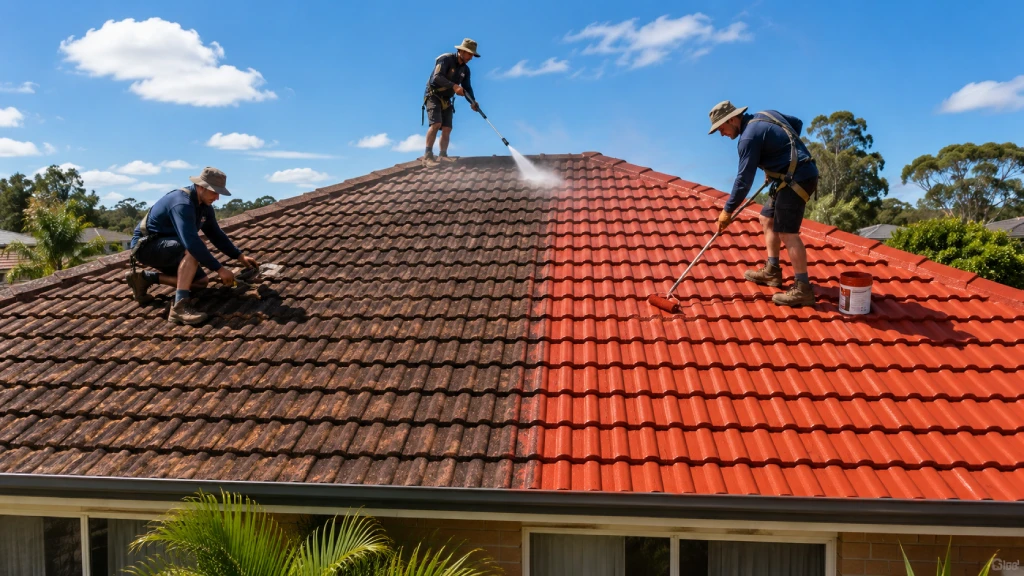
- High-pressure cleaning — stripping away years of moss, lichen, algae and grime
- Repairs — replacing cracked or broken tiles, fixing damaged flashings, sorting out any structural niggles
- Re-bedding and re-pointing — resetting and resealing the ridge capping so it’s watertight again
- Sealing and coating — a protective membrane and premium coating system that shields your roof from UV and salt for years to come
- Final check — because we’re not walking away until it’s done properly
Every step matters and skipping one is usually how a “restoration” ends up needing another restoration in five years instead of fifteen.
Terracotta Tiles: A Bit More TLC, A Lot More Reward
If your home’s rocking terracotta, you’ve got one of the most classic and good-looking roof types around — but terracotta does ask for a slightly gentler, more detailed touch. Over time, the clay can develop cracks, the glaze can wear thin, and moss loves nothing more than settling into those textured tiles.
The trick with terracotta knows which tiles genuinely need replacing versus which ones just need a clean and reseal — get that call wrong and you’re either wasting money or setting yourself up for future leaks. Our team has spent years learning exactly how to bring tired terracotta back to life without losing that classic look, and you can see the full process on our terracotta roof restoration page. Done properly, a terracotta restoration doesn’t just stop leaks — it genuinely lifts your kerb appeal (and your property value, if that’s ever on the cards).
Cement Tiles: The Coast’s Most Common Roof, Done Right
Cement tile roofs are everywhere on the Central Coast, and for good reason — they’re durable and cost-effective. But cement tiles are porous, which means they soak up moisture, and over the decades that leads to fading, cracking, and eventually that dull, chalky look that makes a home feel older than it is.
A proper cement roof restoration deals with all of this: cleaning out years of built-up grime, patching cracks, re-bedding loose ridge caps, and finishing with a quality flexible coating that seals the tile and stops it soaking up water like a sponge. If your roof’s looking a bit flat and lifeless, our cement roof restoration service is usually where the transformation starts — and it’s often the single best value job you can do on your home.
Roof Coating and Painting: Not Just About Looks
There’s a common myth that roof painting is purely cosmetic — a bit of colour to match the new fence. In reality, a quality roof coating is one of the hardest-working products on your entire property. It reflects UV, resists mould and algae growth, flexes with temperature changes (crucial in a climate that swings from 35-degree summer days to cold snaps in winter), and adds a genuine waterproof barrier over your tiles.
We use premium, purpose-built coating systems designed for coastal conditions, applied properly across every tile — not just the bits you can see from the street. Have a look through our roof painting services for the colour options and coating systems we work with. Pro tip: a well-applied coating job, done right the first time, will comfortably outlast a cheap one by a decade or more.
Roof Cleaning and Moss Removal: The Job Everyone Underestimates
Moss looks harmless — almost charming, in a “cottage in the woods” kind of way. On your roof, it’s the opposite of charming. Moss and lichen hold moisture against your tiles around the clock, which speeds up cracking, works its way under the tile edges, and can lift tiles just enough to let water in during heavy rain.
Regular, professional roof cleaning isn’t just about looking tidy for the street — it’s genuine preventative maintenance. Our roof cleaning services use controlled high-pressure equipment (not the garden hose special) to strip moss; lichen and built-up grime without damaging the tile surface underneath, setting your roof up properly for a fresh coat if one’s on the cards.
Roof Repairs: Small Fixes That save Big Money
Not every roof needs a full restoration. Sometimes it’s a handful of cracked tiles after a storm, a flashing that’s come loose around the chimney or a leak that’s been dripping into the roof cavity for months without anyone noticing. Left alone, small issues like these are exactly how a $400 repair turns into a $9,000 ceiling replacement.
Our roof repair team handles everything from a single cracked tile to more involved storm damage repairs across the whole Central Coast NSW region — residential, commercial, the lot. If you’ve had a big blow come through and you’re not sure whether your roof took a hit, it genuinely costs nothing to get it checked.
Colorbond Roofs: When Replacement Beats Restoration
Sometimes restoration isn’t the answer, and any honest roofer will tell you that straight up. If your metal roof has widespread rust, structural sagging, or is simply past its useful life, a Colorbond replacement is often the smarter long-term move — fire resistant, energy efficient (that reflective surface can noticeably cut your cooling bills over an Aussie summer), and built to outlast just about anything else on the market.
We’ll always give you the straight answer on restore-versus-replace rather than pushing whichever job pays better. Details on materials, colours and process are on our Colorbond roof replacement page.
Don’t Forget the Fascia and Gutters
Your roof might be immaculate, but if your fascia boards are rotting or your gutters are sagging under the weight of last autumn’s leaves, water’s still going to find its way where it shouldn’t. Fascia and gutter issues are sneaky — they sit at the edge of the roofline, easy to overlook, but they’re doing a critical job of directing water away from your walls and foundations.
Whether it’s timber fascia that’s seen better days or gutters that need a full replacement rather than another patch job, our fascia and gutter replacement service rounds out a complete roof restoration — because there’s not much point sealing the roof if the water’s just going to pool at the edges instead.
So, Who’s the Best Roofing Company on the Central Coast?
Look, we’re a bit biased, but we’ll let two decades of local jobs do the talking rather than just telling you we’re great. What actually separates a genuinely good local roofer from a fly-by-night operation with a ute and a Facebook page?
- Local knowledge — we know which suburbs cop the worst salt exposure, which roof styles are common where, and how local council requirements work
- A real warranty — backed in writing, not just a handshake
- Straight answers — including telling you when you don’t need the full works
- Proper process, every time — not a rushed job squeezed in between two bigger contracts
- A track record you can actually see — browse real completed jobs across the Coast on our work portfolio
If you’re comparing quotes (and you should — always get more than one), ask any roofer exactly what’s included in their “restoration.” You’ll quickly work out who’s doing a full job and who’s cutting corners.
Ready to Sort Your Roof Out?
Whether it’s a full restoration, a targeted repair, or you’re just not sure what state your roof’s actually in, the easiest first step is a proper inspection. No pressure, no scare tactics — just an honest look and a clear quote. Get in touch through our contact page and we’ll get someone up there for a look. And if you’re after more tips on keeping your home in shape between jobs, our blog has plenty more where this came from.
Frequently Asked Questions
How much does roof restoration cost on the Central Coast? It varies depending on roof size, tile type and how much repair work is needed, but most restorations sit somewhere between a few thousand dollars and around $9,000–$10,000 for larger homes. A proper inspection and written quote is the only way to get an accurate figure for your place.
How long does a roof restoration take? Most residential restorations take between two and five days, weather permitting. Larger or more complex roofs, or ones needing significant tile replacement, can take a little longer.
How often should I get my roof cleaned? As a general rule, every two to three years is a good rhythm for Central Coast homes, though properties under heavy tree cover or right on the coastline may benefit from more frequent cleans.
Is restoration better than a full roof replacement? For most roofs that are structurally sound, restoration is far more cost-effective and can add 15+ years of life. Replacement generally only makes sense when there’s structural damage, widespread rust, or the roof is simply too far gone to seal properly.
Do you work across the whole Central Coast NSW region? Yes — from The Entrance and Terrigal down to Gosford, Erina, Woy Woy, Wyong, Umina and everywhere in between, both residential and commercial.
What’s included in a roof restoration warranty? Our restorations come with a 12-year warranty, covering the workmanship and coating system so you’ve got genuine peace of mind, not just a sales promise.
Can you match my existing roof colour? Absolutely — whether it’s a Colorbond replacement or a coating refresh on tiles, we work with a wide range of colours to match or completely refresh your home’s look.