
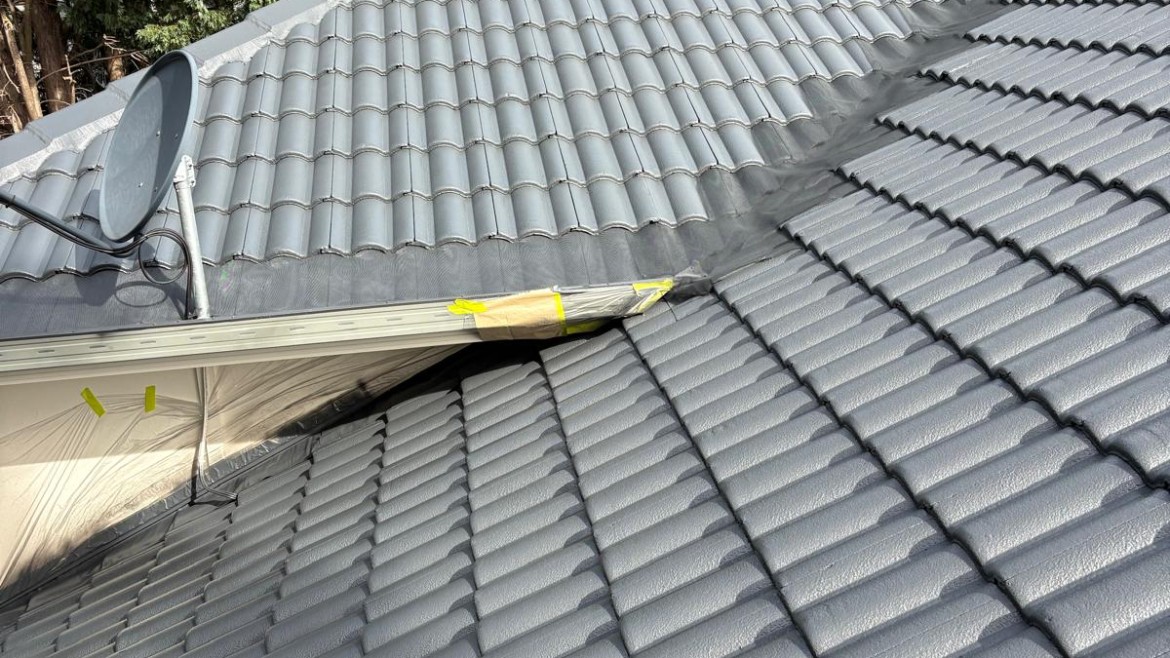
There’s a moment every Central Coast homeowner eventually has. You’re standing in the driveway, bin night rubbish in hand, and you actually look up at your roof for the first time in years. And what you see is not great. Tiles gone chalky and pale. Moss creeping along the ridge caps like it owns the place. A gutter sagging slightly on one corner, like it’s tired and wants a sit down. Welcome to the club — pretty much every house from Woy Woy to Wyong gets here eventually, because salt air, blazing sun and the occasional east coast low don’t muck around.
The good news? None of that means a new roof. Most of it means restoration — a fraction of the cost, a fraction of the mess, and honestly, the kind of transformation that makes neighbours start “casually” asking who did the work. This guide is the no-fluff version of everything you need to know about roof restoration on the Central Coast: why roofs fail here specifically, what actually needs doing, how the process runs, and how to pick someone who won’t ghost you after the deposit clears.
Why Central Coast Roofs Cop It Worse Than Most
Roofs inland have it easy. Ours don’t. Living between the Tasman and the bush means Central Coast roofs are getting hit from two directions at once — salt-laden coastal air corroding metal fixings and breaking down protective coatings, and harsh UV exposure baking tiles until they crack, fade or go porous. Add in the humidity that sits over places like Terrigal and Avoca, and you’ve got a perfect environment for moss, lichen and algae to set up permanent residence on anything north-facing or shaded by trees.
Then there’s the storm factor. The Coast gets its fair share of wild weather — hail, wind gusts that flip trampolines into next door’s yard, and downpours that test every join, flashing and gutter on the house. A roof that’s slightly neglected becomes a roof that’s suddenly leaking onto the good carpet during a Tuesday night thunderstorm.
None of this is about scaring you. It’s about explaining why “she’ll be right” isn’t really a roofing strategy here, and why a proper, locally-experienced eye on your roof matters more on the Coast than almost anywhere else in NSW. The team at Bass Roof Restoration has spent years working exclusively in this climate, which is a very different skillset to a roofer who mostly works out west.
What Roof Restoration Actually Involves (Not The Watered-Down Version)
“Roof restoration” gets thrown around as a catch-all term, so let’s actually unpack it. A genuine, properly done restoration isn’t a quick pressure clean and a lick of paint — it’s a structured process built to add 10-15+ years back onto your roof’s life. Here’s roughly how a job should run, and the kind of detail worth asking about if you’re getting quotes from anyone (not just us).
1. A Real Inspection, Not A Drive-By Guess
Before anything happens, your roof needs eyes on it — properly, up close, not eyeballed from the street. This means checking for cracked or slipped tiles, deteriorated pointing, rusted screws and flashings, gutter condition, and any structural sagging. You can browse the full breakdown of what’s covered on the roof services page, which lays out the full scope rather than the marketing highlight reel.
2. High-Pressure Cleaning — The Satisfying Bit
This is the step everyone secretly loves watching. A high-pressure clean strips away years of grime, moss, lichen and general coastal build-up, revealing the actual condition of the roof underneath (sometimes a pleasant surprise, sometimes not). It’s also non-negotiable from a technical standpoint — paint and sealant won’t bond properly to a dirty surface, no matter how good the product is. If you just want the clean without the full works, that’s a standalone option too — check out the dedicated roof pressure cleaning page for the specifics on what it includes.
3. Repairs — Fixing What’s Actually Broken
Cracked tiles get replaced, not painted over (painting over a crack is basically lying to your future self). Ridge capping that’s come loose gets re-bedded and re-pointed. Rusted screws on metal roofing get swapped out. Any flashing issues around chimneys, skylights or vents get sorted before sealing happens, because sealing a leak point just hides the problem temporarily — it doesn’t fix it. For anything from a handful of cracked tiles to storm damage that needs sorting fast, the roof repairs Central Coast crew handle it as standalone work too, no full restoration required.
4. Re-Bedding and Re-Pointing (For Tile Roofs)
This is where terracotta and concrete tile roofs get their backbone reinforced. The mortar that holds your ridge capping in place degrades over time — it cracks, crumbles, and eventually lets water in along the ridge line. Re-bedding replaces that mortar; re-pointing seals over the top with a flexible, weatherproof compound that moves with the roof instead of cracking again in twelve months. It’s detailed, slow work and honestly where a lot of cheap restoration jobs cut corners.
5. Sealing and Priming
Before any colour goes on, a primer or sealer locks down the porous tile surface and gives the topcoat something proper to grip onto. Skip this step and you’ll be repainting again in three years instead of fifteen.
6. The Topcoat — Where Your Roof Gets Its Glow-Up
This is the transformation bit. A quality acrylic roof membrane goes on, usually in two coats, and it’s not just cosmetic — it reflects UV, resists algae regrowth, and adds a genuine waterproof layer over the whole roof. Whether you’re working with terracotta, concrete or metal, there’s a dedicated approach for each: the terracotta roof restoration process differs from cement roof restoration, and colour, coating thickness and prep all shift depending on the tile type. If you’re purely after a fresh look without a full structural restoration, the roof painting service covers that on its own.
What About Metal And Colorbond Roofs?
Different beast entirely. Metal roofs don’t get re-bedded or re-pointed (no mortar involved), but they’ve got their own failure points — rusted fastener screws, deteriorated ridge flashing, and oxidised paintwork that chalks off when you run a finger across it. Sometimes restoration makes sense; sometimes, if the sheeting itself has had it, a full Colorbond roof replacement is genuinely the smarter long-term move. A decent roofer will tell you honestly which camp your roof falls into rather than upselling a restoration on a roof that’s past saving — because a five-year fix that fails isn’t actually cheaper than doing it properly once.
Don’t Forget What’s Hanging Off The Edge
Gutters and fascias get ignored constantly, which is wild, because they’re doing one of the most important jobs on the house — directing water away before it finds its way into your walls, eaves or foundations. Sagging gutters, rusted fascia boards, or guttering that’s pulled away from the roofline are often the actual cause of “mystery” damp patches inside the house, long before anyone thinks to blame the roof itself. The fascia and gutter replacement service exists for exactly this reason — it’s frequently bundled in with a restoration, but it absolutely stands on its own too.
“But Is My Roof Actually Bad Enough To Need This?”
Fair question. Here’s a quick, no-nonsense checklist. If you’re nodding along to two or more of these, it’s worth getting eyes on it sooner rather than later:
- Tiles look chalky, faded, or have lost their original colour and sheen
- Moss or dark algae streaks are visible, especially on shaded sections
- You’ve noticed a water stain on a ceiling that “appeared from nowhere”
- Gutters overflow during moderate rain, not just downpours
- It’s been 10+ years since the roof was last touched
- Neighbours with similar-aged homes have recently had work done (a genuinely good early warning sign — roofs built in the same era tend to fail around the same time)
If your roof is actively leaking or you’ve just been through a storm, that’s a different conversation entirely — that’s emergency roof repairs territory, and it’s worth calling sooner rather than waiting for a “good time.”
Why Restore Instead Of Replace?
The maths is usually pretty blunt: a full re-roof can run multiple times the cost of a quality restoration, for a result that — provided the structure underneath is sound — looks and performs almost identically. Restoration also means:
- No structural disruption. Your existing roof frame, sarking and tiles stay put; there’s no stripping the house back to the rafters.
- Faster turnaround. Most residential restorations wrap up in days, not weeks.
- Better resale optics. A freshly restored roof photographs beautifully for real estate listings and is one of the first things a buyer’s inspector checks.
- Genuine longevity. Done properly, a restoration buys you another decade-plus before you need to think about it again.
Replacement still has its place — if the timber structure is compromised, if tiles are too far gone to clean and recoat, or if you’re switching roof materials entirely (tile to Colorbond, for example). A good roofer assesses honestly rather than pushing whichever job pays better.
What Actually Separates A Good Roofer From A Dodgy One
The Central Coast roofing scene has its fair share of operators who’ll quote cheap, rush the prep, skip the re-pointing, and disappear after the final invoice clears. Here’s what’s worth checking before you commit:
- Local experience specifically, not just general trade experience. Coastal conditions are their own challenge.
- A written scope of work, not a vague verbal “yeah we’ll sort it all out.”
- Photos of past jobs. Genuine before-and-afters, not generic stock images. Have a browse through the work portfolio to see what finished jobs around the Coast actually look like.
- Proper licensing and insurance — ask, don’t assume.
- A clear explanation of process, ideally one that sounds a lot like everything outlined above, not a one-line “we’ll paint your roof, mate.”
The Bottom Line
Your roof is doing the least glamorous, most important job on the entire property, and it’s been doing it largely unthanked for years. A proper restoration isn’t a luxury — it’s one of the better value-for-money jobs you can do on a Central Coast home, protecting everything underneath it while quietly adding value to the place. Whether you need a full restoration, a standalone clean, a quick patch-up repair, new guttering, or you’re just not sure which camp you fall into yet, getting a proper inspection costs you nothing but a phone call.
Curious about more on coastal roof maintenance, seasonal prep, or specific repair stories from around the area? There’s a running collection of guides over on the blog worth a browse. And if you’ve made it this far and you’re already picturing your roof looking decent again, the easiest next step is heading over to get in touch for a free, obligation-free inspection — before that small chalky patch turns into a much more expensive Tuesday night surprise.