
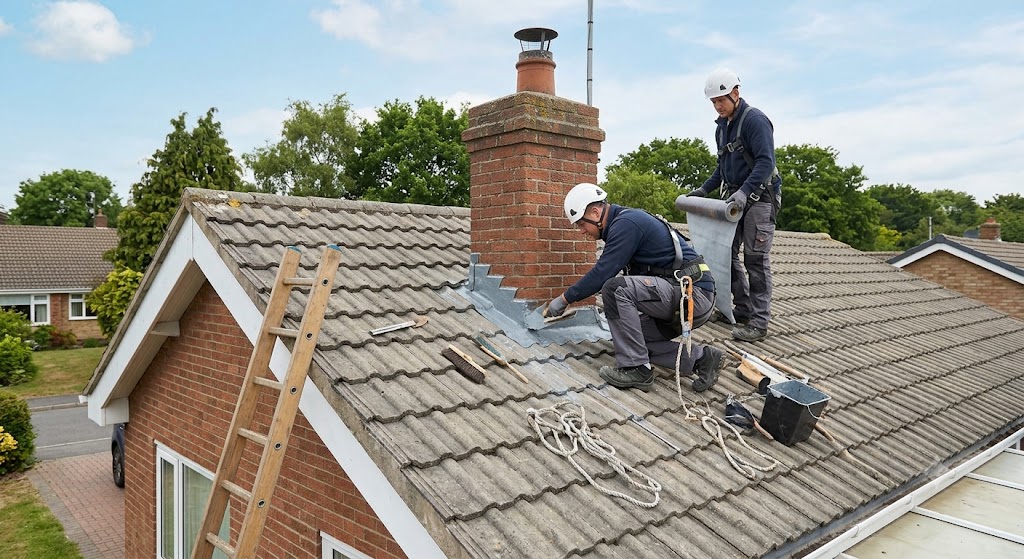
There’s a very specific sound a Central Coast roof makes right before it starts costing you money. It’s not a bang, it’s not a crash, it’s a sort of quiet little tick-tick-tick on a still night, usually around 2am, usually right after you’ve just repainted the ceiling. That’s a leak finding its way through a cracked tile or a rusted-out Colorbond sheet, taking its sweet time, in absolutely no hurry, because it knows it’s got you.
If you live anywhere between Gosford and The Entrance, Woy Woy and Wyong, Terrigal and Tuggerah, your roof has been copping an absolute hiding for years and probably never once complained about it. Salt air rolling in off the water, brutal UV, sideways storms that seem to specifically target Australia Day weekend, the odd king tide’s worth of humidity sitting on your tiles overnight. Roofs up here don’t get an easy run, and most homeowners genuinely have no idea how much abuse is happening 4 metres above their heads until something drips onto the good couch.
This is where Bass Roof Restoration comes in. We’re a family owned crew based out of The Entrance North, and between us we’ve clocked up over 20 years crawling around roofs across the entire Central Coast — tiled, terracotta, cement, Colorbond, the lot. We’re not here to sell you a scare campaign or a roof you don’t need. We’re here to give it to you straight, the way you’d want a mate in the trade to explain it over a beer, not a sales brochure.
So let’s actually talk about what’s going on up there, what your options are, and how to pick a roofing company Central Coast locals actually trust rather than one that just has a flashier Facebook ad.
Why Central Coast Roofs Age Faster than You’d Expect
A roof in, say, western Sydney has a fairly predictable enemy list: sun, the odd storm, general wear. A Central Coast roof has all of that plus salt-laden coastal air that quietly corrodes metal fixings, screws, and flashing from the inside out. Add in the moisture that hangs around our bushland pockets — hello moss and lichen — and you’ve got a roof ageing at a noticeably faster clip than its inland cousins.
Most homeowners only think about roofing services Central Coast wide when something’s already gone wrong. Fair enough, roofs aren’t exactly top of mind on a Tuesday. But a bit of proactive attention saves an enormous amount of pain (and cash) down the track. If any of the following sound familiar, it’s worth getting a proper set of eyes on your roof rather than squinting up at it from the driveway:
- Water stains creeping across the ceiling, especially near cornices
- Tiles that look cracked, slipped, or just slightly “off” compared to their neighbours
- Rust spots or discolouration on a metal roof
- Crumbling mortar around the ridge caps (the pointy bit running along the top)
- Moss, lichen, or that greenish-black staining spreading across tiles
- Granules or grit collecting in your gutters after rain
- A general “tired” look — chalky paint, faded colour, patchy sections
None of these are emergencies on day one. All of them become expensive if you leave them for a few more Christmases. We cover the full breakdown of what to look for on our roof services Central Coast page if you want the longer version.
Terracotta or Cement? Your Roof Type Actually Matters
This is where a lot of restoration jobs go sideways when the wrong crew is on the tools. Terracotta and cement tiles might look similar from the ground, but they behave completely differently once you start cleaning, sealing, and painting them.
Terracotta is a fired clay product. It’s naturally porous, tends to be more brittle underfoot, and needs specific primers and sealants that let the tile breathe rather than trap moisture underneath. Get this wrong and you’ll see peeling and flaking within a couple of years, which honestly happens more often than it should across the Coast. Proper terracotta roof restoration Central Coast NSW work involves careful tile-by-tile assessment, re-bedding and repointing the ridge capping, and a breathable sealing system that actually suits clay.
Cement tiles, on the other hand, are denser, less porous, and generally more forgiving — but they come with their own headache: they lose their surface coating over time and start looking chalky and washed out, even when structurally the tile underneath is perfectly sound. A proper cement tile roof restoration Central Coast job focuses heavily on surface prep, because paint applied over a dirty or degraded cement tile will not hold, no matter how good the paint is. We run through the whole process on our cement roof restoration Central Coast page.
The short version: if a quote doesn’t mention which tile type you’ve got and how the process changes because of it, that’s a red flag worth noticing.
What Actually Happens During a Roof Restoration?
Strip away the marketing language and a genuine roof restoration comes down to a fairly logical sequence. Skip a step, and the whole job’s lifespan takes a hit.
- Inspection. A proper look across every section, not a glance from the ladder. Cracked tiles, loose ridge caps, valley condition, gutter health, the works.
- Repairs first. Broken tiles get replaced, ridge capping is re-bedded and repointed, and any structural niggles get sorted before anything cosmetic happens.
- High-pressure clean. This strips off years of grime, moss, lichen, and loose old coating so the new sealant actually has something to grip onto.
- Priming and sealing. A breathable primer suited to your specific tile type, sealing the surface and locking down any remaining porosity.
- Painting. Two coats, generally, using a coating system rated for harsh coastal UV and salt exposure — this is where roof painting services Central Coast homes need really earns its keep, because a cheap paint job fades and chalks within a couple of seasons out here.
- Final clean-up and inspection. Gutters cleared of debris, site tidied, and a walkthrough so you know exactly what’s been done.
We go into more detail on the painting side specifically over on our roof painting Central Coast page, including the coating systems we rate for coastal conditions.
If your roof’s not quite bad enough for a full restoration but is looking grubby or has moss creeping in, a straightforward roof cleaning services Central Coast job on its own can buy you years and instantly lift your kerb appeal — genuinely one of the better value jobs going, and something worth booking via our roof cleaning Central Coast page before it gets out of hand.
When It’s a Repair, Not a Full Restoration
Not every roof drama needs the full six-step treatment. Sometimes you’ve got a single cracked tile after a storm, a loose flashing around a skylight, or a valley that’s started letting water through during heavy rain. That’s where proper roof repair services Central Coast wide come in — targeted fixes that stop the bleeding without you needing to fork out for a whole-roof job.
The trick is honesty. A decent tradesperson tells you when a repair will genuinely do the job and when you’re just delaying an inevitable, more expensive restoration by six months. We’d rather tell you the truth and earn your trust for the bigger job later than talk you into work you don’t need yet. More on how we approach this on our roof repairs Central Coast page.
Got a Colorbond Roof? Different Rules Apply
Metal roofing plays an entirely different game. Colorbond roofing Central Coast wide is popular for good reason — it’s lighter, handles our storm season well, and looks sharp on a modern build. But it’s not invincible against salt air. Fixings corrode, screws work loose over time, and old-style sheets can start showing surface rust, particularly near the coast where salt spray practically becomes part of the weather forecast.
Sometimes a metal roof just needs a proper clean, respray, and fastener check. Other times, especially on older homes, it genuinely makes more sense to replace it outright with a modern Colorbond system that’s built for exactly this climate. We walk through both pathways honestly on our colorbond metal roof replacement Central Coast page, including what tends to tip the decision one way or the other.
Don’t Forget What’s Hanging Off the Edge
Gutters and fascias get ignored constantly, right up until they overflow directly onto someone’s head during a downpour. A roof can be in mint condition and still send water straight into your walls or eaves if the guttering’s rusted through, sagging, or clogged with a small ecosystem of leaves and twigs.
Gutter replacement services Central Coast properties often need go hand-in-hand with a roof restoration, purely because a fresh roof pushing water into a knackered gutter system is a bit like putting new tyres on a car with no brakes. It works fine right up until it very much doesn’t. Have a look at our fascias and gutter replacement Central Coast page if your gutters are looking more rust than roll-formed steel these days.
Picking the Right Roofing Company (Without the Guesswork)
Everyone claims to be the best. That’s marketing, not proof. Here’s what’s actually worth checking before handing your roof — and a decent chunk of money — over to a crew:
- Licensing and insurance. Ask outright. A legitimate operator will happily show you.
- Local experience. A team that’s worked across Gosford, Erina, Terrigal, Woy Woy, and Wyong understands coastal conditions in a way an inland contractor simply won’t.
- A clear, written process. If they can’t explain what a restoration actually involves, that’s a warning sign, not a good one.
- Warranty backing their work. Ours runs 12 years, and we’re upfront about what it covers.
- Photos of real completed jobs, not just stock imagery. Have a browse through our work portfolio to see actual Central Coast roofs we’ve brought back from the brink.
- Straight answers, not upselling. If every quote somehow ends up needing “just a bit extra,” that’s a pattern worth noticing.
If you’re weighing up colour options for a repaint or a Colorbond upgrade, our colour chart tool is a handy way to visualise finishes before committing to anything. And if you want to see what we’ve actually been rambling on about lately, our blog has more deep dives into specific roofing dramas we’ve sorted across the Coast.
What Does a Roof Restoration Actually Cost?
Every roof’s different, so treat any online figure as a rough compass rather than a fixed price. As a general guide across the Central Coast, a full tile roof restoration typically sits somewhere in the vicinity of $4,500 to $9,500 depending on roof size, tile condition, and access. A complete roof replacement is a bigger outlay, generally landing somewhere between $18,000 and $45,000+ depending on the scope and materials involved. Repairs and cleaning jobs sit well below both of those, which is exactly why catching problems early is such a good financial move.
The only way to get a genuinely accurate figure is a proper on-site inspection, which is what we offer with every free quote — no guesswork, no vague “starting from” figures designed to look good in an ad and then blow out once someone’s actually on your roof.
Frequently Asked Questions
How long does a roof restoration actually take once work starts? Most tiled roof restorations run 2 to 4 days from start to finish, weather permitting. Colorbond respray or replacement jobs can vary more depending on scope, but we’ll give you a realistic timeline before a single tool touches your roof, not a vague “a few days” that stretches into three weeks.
Can I sell my house without restoring the roof first? You certainly can, but a tired-looking roof is one of the fastest ways to spook a buyer or invite a lowball offer during building inspections. Even a straightforward roof clean before listing tends to lift kerb appeal noticeably and can genuinely add more to the sale price than the job costs.
Is roof restoration actually worth it compared to full replacement? For a structurally sound roof with good bones, restoration is almost always the smarter financial call — you get a roof that looks and performs like new at a fraction of replacement cost. Replacement only really makes sense when there’s genuine structural damage, widespread rust, or a tile roof that’s simply past the point restoration can fix.
How often should Central Coast homeowners get their roof cleaned? Given our salt air and moss-friendly humidity, every 2 to 3 years is a sensible rhythm for most properties, though homes tucked under trees or close to the water sometimes need it sooner. Regular cleaning is honestly one of the cheapest forms of roof insurance going.
Do you work on strata, commercial, and industrial roofs, or just houses? All of the a bove. We handle residential, strata, realty, commercial, and industrial roofing work across the Coast, so whether it’s a single home or a body corporate job, the same attention to detail applies.
What’s included in your warranty? We back our restoration work with a 12-year warranty covering workmanship and the coating system applied. We’ll walk you through exactly what’s covered during your quote, no fine print surprises.
Do you provide obligation-free quotes? Yes, every quote is free and comes with an actual physical inspection, not a guess based on a photo you’ve emailed through. We’d rather see the roof with our own eyes than promise you a number we can’t back up.
Ready to Sort Your Roof Out Properly?
Your roof isn’t going to fix itself, and that faint 2am ticking sound isn’t going to stop on its own either. Whether you need a full restoration, a straightforward clean, a Colorbond upgrade, or just an honest opinion on what’s actually going on up there, the team at Bass Roof Restoration is a phone call away.
Get in touch through our contact page for a free, no-pressure quote, and let’s get your roof back to doing its actual job — keeping the weather out and your ceiling exactly where it should be.