
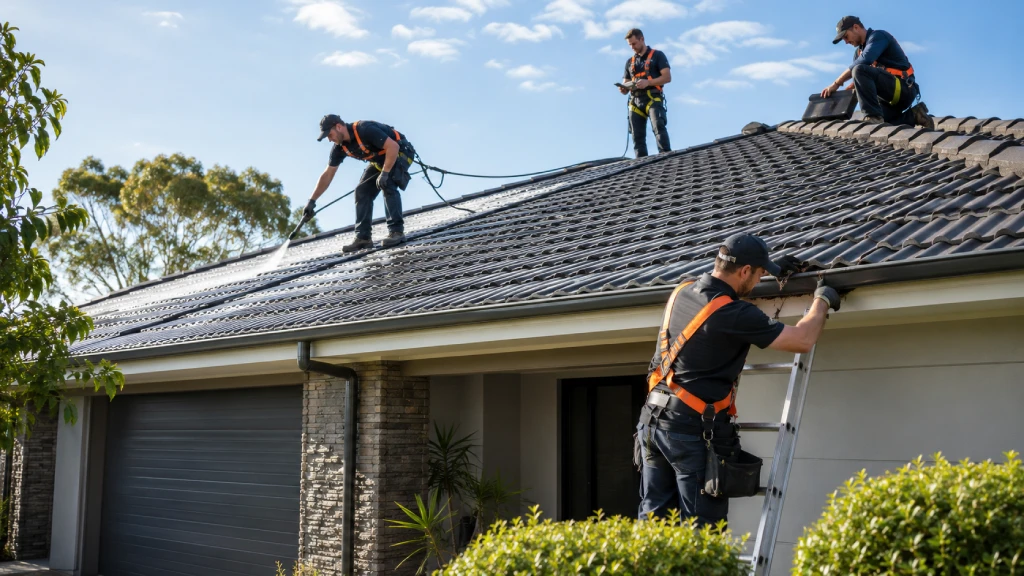
Written for Central Coast homeowners who’d rather not discover a leak the hard way.
Let’s be honest — nobody wakes up on a Saturday morning thinking, “You know what, today’s the day I really think about my roof.” It’s up there, it’s doing its job (fingers crossed), and as long as it’s not raining inside, it stays out of sight and out of mind.
But here’s the thing: your roof is one of the hardest-working parts of your home. It battles salt air off the Pacific, punishing summer UV, winter storms rolling in off the Hawkesbury, and enough moisture cycling to keep an entire ecosystem of moss, lichen, and algae happily colonising your tiles — rent-free, no less.
By the time most Central Coast homeowners actually look at their roof, the damage is already well underway. And that’s where the real costs start adding up.
This guide covers everything you need to know — the warning signs, the full process, the benefits, and how the right licensed roofers on the Central Coast can turn a tired, deteriorating roof into something you’re actually proud of.
Why Central Coast Roofs Age Faster Than You Think
The Central Coast isn’t just a beautiful place to live — it’s genuinely brutal on building materials. The combination of coastal humidity, airborne salt particles, heavy summer rainfall, and intense UV exposure creates one of the more demanding environments for roofing in NSW.
Here’s what’s quietly happening on top of your house right now:
Moss and lichen are setting up camp. The Central Coast’s warm, humid climate is basically a five-star resort for biological growth. Moss doesn’t just look bad — it holds moisture against your tiles like a sponge, which accelerates cracking, deterioration, and water ingress. Left untreated, a modest moss problem becomes a structural one surprisingly fast.
Your ridge capping is cracking and shifting. The mortar that holds ridge caps in place dries out, cracks, and eventually loosens. When a ridge cap lifts in a wind event, rainwater gets in — and water finds every possible way to make your life difficult.
Tile coatings are fading and failing. The original sealant on terracotta and concrete tiles doesn’t last forever. Once it breaks down, tiles become porous, absorb water, and lose structural integrity. What looks like a cosmetic issue is actually your first line of waterproofing waving the white flag.
Paint is chalking and peeling. If your roof has been painted before, you’ll often notice chalking (that powdery white residue when you run your hand across), bubbling, or outright peeling — all signs the coating has reached the end of its life.
The good news? All of this is fixable. And fixing it now — rather than after your ceiling starts showing water stains — is dramatically cheaper.
What Does a Full Roof Restoration Actually Involve?
This is where a lot of homeowners get confused. “Restoration” sounds vague. Is it just a clean? Is it a repaint? Is it replacing tiles?
The answer: it’s all of the above, done in the right sequence. Here’s the full process carried out by professional roof services on the Central Coast:
Step 1 — Full Roof Inspection
Before anyone picks up a pressure washer or a paintbrush, a thorough inspection comes first. A licensed roofer walks the entire roof, checks for cracked, broken, or slipped tiles, inspects ridge capping and mortar, assesses valleys and flashing, looks at gutters and fascias, and identifies any areas of concern that need attention before cleaning or painting begins.
This step is non-negotiable. Painting over problems doesn’t fix them — it buries them until they become expensive.
Step 2 — Roof Moss Removal and High-Pressure Cleaning
This is where the transformation becomes visible. Professional roof cleaning and treatment on the Central Coast uses high-pressure equipment specifically calibrated for tile surfaces — powerful enough to strip moss, lichen, algae, and years of grime, but controlled enough not to damage the tiles underneath.
This isn’t the same as hiring a bloke with a Bunnings pressure washer for a Saturday arvo job. The pressure settings, nozzle types, and technique matter enormously. Too much pressure on old terracotta tiles can fracture the surface. Too little and you’ve just wet the moss.
After pressure cleaning, a chemical biocide treatment is applied. This kills the root systems of moss and lichen that remain embedded in porous tile surfaces — preventing rapid regrowth and extending the time before you need to do it again.
Gutters and downpipes are cleared at this stage too, so water flows the way it’s supposed to.
Step 3 — Repairs: Repointing and Rebedding Ridge Caps
Once the roof is clean and dry, all structural repairs are carried out. This includes:
- Rebedding: Replacing deteriorated mortar beds that hold ridge caps in position
- Repointing: Applying fresh flexible pointing compound over the new beds, which accommodates the natural movement of the roof without cracking
- Tile replacement: Swapping out cracked, broken, or missing tiles
- Flashing repairs: Resealing any areas where flashings around chimneys, skylights, or penetrations have lifted or corroded
This is the step that many cheaper operators skip or rush — and it’s the reason some “restored” roofs develop problems within 12–18 months.
Step 4 — Roof Painting and Sealing
Here’s where your roof goes from looking weathered and rough to genuinely impressive.
Professional roof painting services on the Central Coast involves applying specialised elastomeric roof coatings — not standard exterior house paint, and certainly not whatever’s on special at the hardware store. These coatings are formulated specifically for roofing: they flex with the thermal expansion and contraction of tiles, they’re UV-stable, they breathe to prevent moisture trapping, and they bond properly to the prepared tile surface.
For tile roofs, two coats are standard — a primer/sealer coat followed by a topcoat in your chosen colour. Tile roof painting done correctly doesn’t just look great; it re-seals the tile surface and provides meaningful waterproofing protection for years.
Whether you’ve got a terracotta tile roof that needs its colour restored, a concrete tile roof that’s looking faded and chalky, or a Colorbond roof that needs recoating, the right product and preparation make all the difference.
Not sure what colour to go with? That’s a genuinely fun decision — have a browse through the colour chart and roof colour picker to see how different shades look before you commit.
Why Bother? The Benefits of Professional Roof Restoration
Fair question. Here’s the honest case for investing in proper roof restoration rather than putting it off another year or three:
It extends your roof’s life significantly. A professionally restored roof can last another 10–15 years before needing major attention again. Compare that to the cost of full roof replacement — which runs into the tens of thousands — and restoration looks like extraordinary value.
It stops small problems becoming catastrophic ones. Water ingress doesn’t stay contained. Once it gets through your roof, it attacks timber rafters, ceiling plasterboard, insulation, and wall cavities. The leak you ignore for two wet seasons can turn into a $20,000+ remediation job.
It boosts your property value and kerb appeal. Real estate agents on the Central Coast will tell you: a clean, well-maintained roof dramatically affects first impressions. If you’re selling, a restored roof can recover multiple times its cost in increased sale price. If you’re staying, it’s just nicer to live in a well-kept home.
It improves energy efficiency. Lighter-coloured roof coatings reflect solar radiation rather than absorbing it — which means a cooler house over summer without working your air conditioning as hard. On a Central Coast summer, that’s not a small thing.
It keeps your home legally insurable. Some insurers in NSW are increasingly scrutinising roof condition when assessing claims. A roof in obvious disrepair can complicate things. A maintained, documented restoration gives you a clean record.
How to Know If Your Roof Needs Attention — Right Now
Not sure whether you’re at the “definitely need restoration” stage or the “keep an eye on it” stage? Here are the clearest signals that it’s time to stop watching and start acting:
- You can see green or black biological growth from ground level
- Your roof tiles look powdery, bleached, or faded — especially compared to photos from when you bought the property
- There’s loose or cracked mortar around your ridge caps (you can often see this from the ground with binoculars)
- Your gutters are constantly blocked with moss and tile debris
- You’ve noticed water staining on interior ceilings or walls after rain
- It’s been more than 10 years since the roof was last professionally cleaned or treated
- You’re preparing to sell and want the home looking its best
If two or more of those apply? Don’t wait for the next rain event to confirm your suspicions. A free inspection will tell you exactly where things stand.
Why Choosing Licensed Local Roofers Matters
This isn’t just a tick-a-box compliance thing — it genuinely matters who you let on your roof.
Licensed roofers on the Central Coast are required to hold a current NSW Contractor Licence (or work under one), carry public liability insurance, and meet workplace safety obligations under the Work Health and Safety Act. When someone’s walking around on your roof two storeys up, you want to know they’re trained, insured, and accountable.
Beyond legality, local knowledge matters. A roofer who’s been working across Gosford, Terrigal, Wyong, The Entrance, Woy Woy, Avoca Beach, and the surrounding areas for years understands the specific conditions Central Coast roofs deal with — the salt air, the aggressive UV, the heavy rain events that come through periodically, and the particular products that hold up well in this climate.
Bass Roof Restoration is a family-owned Australian business that’s been caring for Central Coast roofs for over 20 years. They offer a 12-year warranty on their work — which tells you something about how confident they are in the quality of their process and materials.
Want to see the kind of results they deliver before you pick up the phone? The completed project portfolio shows before-and-after transformations across tile, terracotta, and metal roofs throughout the region.
The Central Coast Roof Restoration Checklist (Save This)
Before you call anyone, here’s what you should know, ask, and expect:
Before the quote:
- Can you see moss, lichen, or discolouration from the ground?
- When was the last time the roof was professionally cleaned or painted?
- Are there any visible cracked or missing tiles?
When getting quotes:
- Is the contractor licensed and insured? Ask for their licence number.
- Does the quote include all stages — inspection, cleaning, repairs, and painting?
- What paint products are being used, and what’s the manufacturer’s warranty?
- What’s the workmanship warranty on the completed job?
During the work:
- The roof should be cleaned and fully dry before any painting begins
- Ridge capping repairs should be completed before the topcoat is applied
- You should receive documentation of work completed
After completion:
- Request a copy of the warranty in writing
- Keep a record of the contractor’s licence number and insurance details
- Photograph the finished work for your records
Ready to Have the Roof Conversation?
Your roof has been doing a thankless job up there for years. A bit of professional attention doesn’t just protect your home — it genuinely transforms how the place looks and feels.
Whether you need a full restoration, a professional clean and moss treatment, or you just want someone to take a look and tell you honestly where things stand, the team at Bass Roof Restoration is worth a call.
Have a look at everything they offer across their full range of roofing services, get inspired by their past work, pick a colour you love, and then reach out for a free quote.
Because the best time to sort your roof was five years ago. The second-best time is right now — before the next East Coast low rolls in and makes that decision for you.
Bass Roof Restoration services The Entrance, Gosford, Terrigal, Wyong, Woy Woy, Budgewoi, Toukley, Bateau Bay, Erina, Avoca Beach, Kincumber, Tuggerah, and surrounding areas across the Central Coast NSW.
Licensed, insured, and local. 12-year workmanship warranty. Call 0450 504 952 for a free roof inspection.