
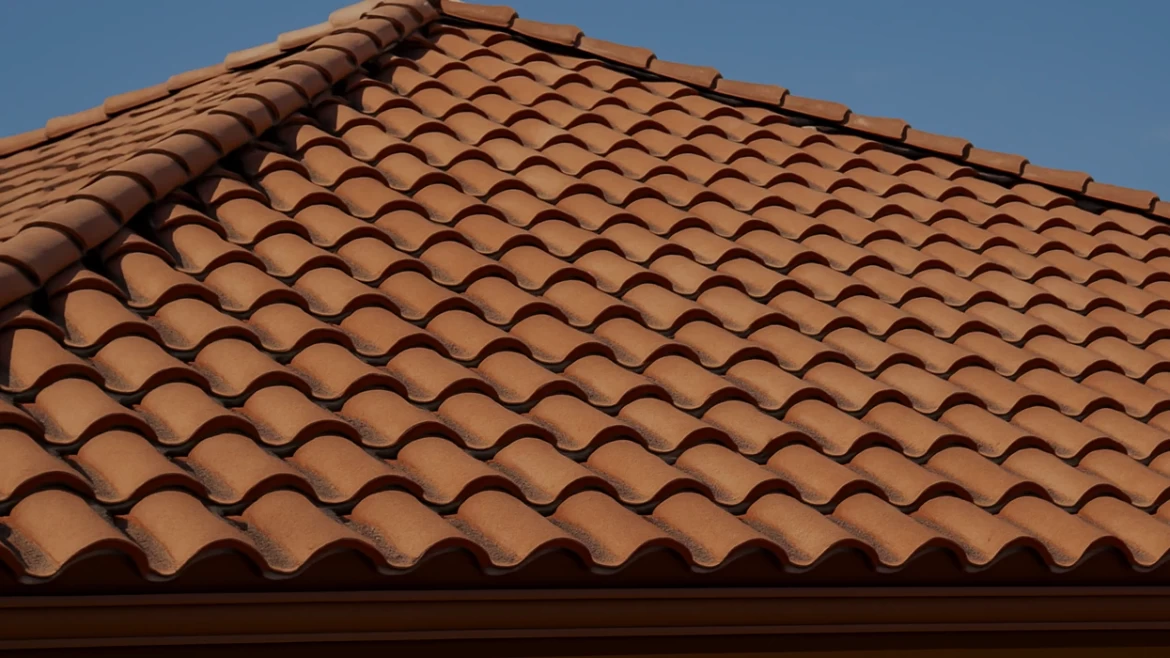
Living on the Central Coast is genuinely brilliant. The beaches, the lakes, the laid-back pace — it’s hard to beat. But here’s the thing nobody mentions at the open home: coastal living is absolutely brutal on your roof.
Salt air off the Pacific, blazing summer UV, east coast lows that roll in with the subtlety of a freight train, and that persistent damp that comes with being so close to the water — your roof is copping all of it, all year round. Most Central Coast roofs are dealing with conditions that would chew through a roof two or three years faster than somewhere inland.
So if you’ve noticed your tiles looking a bit tired, spotted some crumbling mortar along the ridge cap, found a water stain on the bedroom ceiling after that last storm, or just haven’t had anyone look at the roof since the Rudd government — this guide is for you.
We’re going to cover everything: the warning signs to look for, what a proper roof restoration involves step by step, what it’s going to cost you in 2026, and which type of roof service actually suits your situation. No fluff, no sales pitch, just the straight story.
Why Central Coast Roofs Age Faster Than You’d Expect
Before anything else, it’s worth understanding why the Central Coast is a genuinely tough roofing environment — because it explains why “she’ll be right” often isn’t.
Salt air. Homes within a few kilometres of the coast — and that covers a big chunk of the Central Coast — deal with salt-laden air that accelerates corrosion on metal flashings, gutters, roof screws, and Colorbond. What might last 20 years inland can start causing problems at the 10–12 year mark near the water.
UV intensity. Central Coast summers are fierce, and UV exposure degrades the protective coatings on both cement and terracotta tiles over time. A roof that was sealed and coated 10–15 years ago has likely lost a significant portion of its waterproofing capacity just from sun exposure alone.
East coast lows and storm activity. The Central Coast sits in a corridor that receives heavy storm activity — wind-driven rain, hail, and the kind of rainfall that tests every join, every flashing, and every repointing job on your roof.
Biological growth. The humidity near the lakes and waterways creates perfect conditions for lichen, algae, and moss. These aren’t just cosmetic issues — biological growth on tiles holds moisture against the surface and accelerates deterioration from underneath.
The good news? None of this means your roof is a lost cause. It just means regular attention and knowing when to call the right people. And that’s exactly where we come in.
Is Your Roof Trying to Tell You Something? Warning Signs to Watch For
You don’t need to be a licensed roofer to spot trouble early — and catching it early is always cheaper. Here’s what Central Coast homeowners should keep an eye on:
Cracked, chipped, or slipped tiles. A few broken tiles might seem minor, but every exposed gap is an entry point for water. In a storm, one cracked tile can let enough water in to soak the ceiling cavity and cause damage that costs far more to repair than the tile itself.
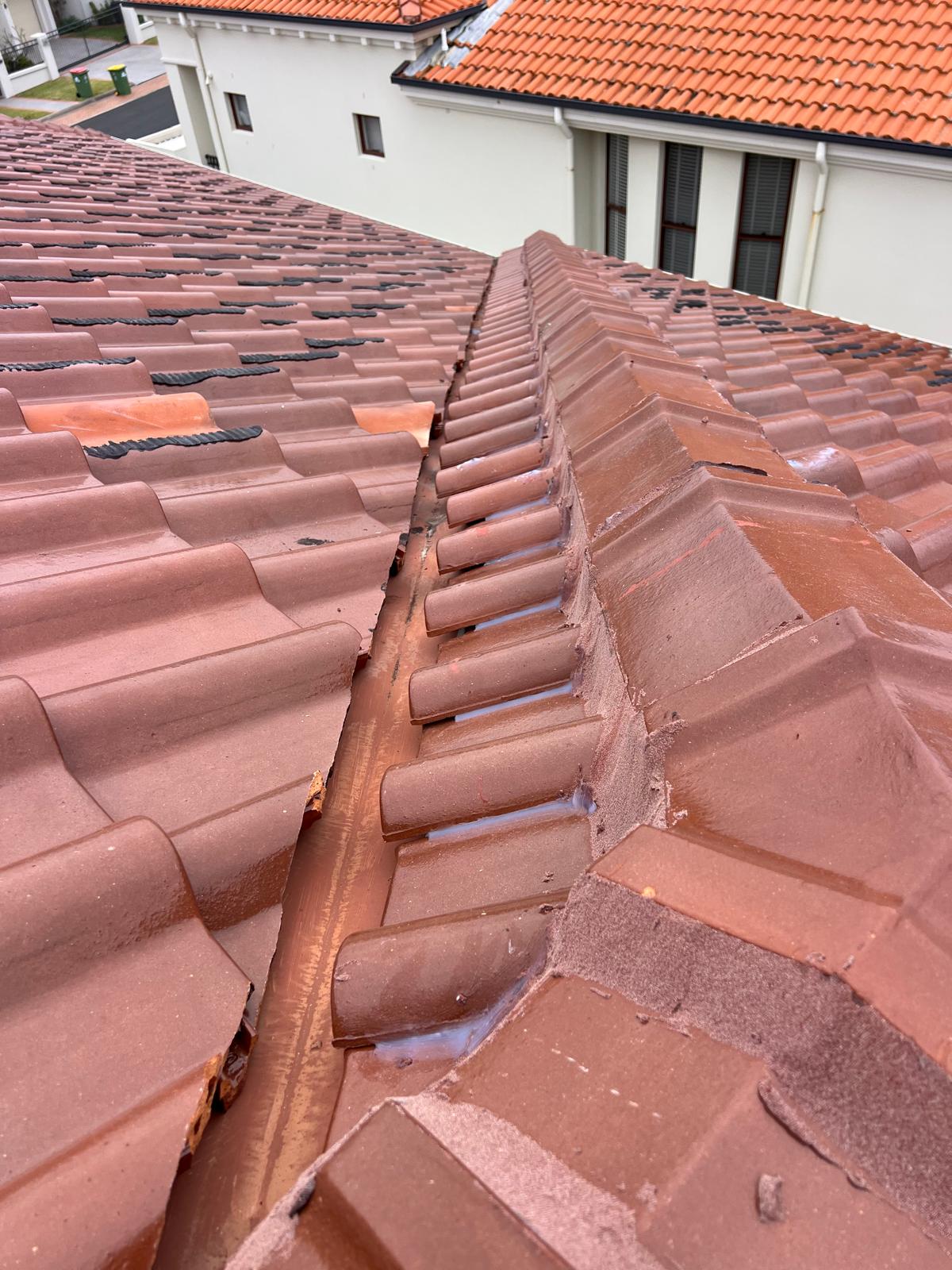
Crumbling ridge cap mortar. The mortar (bedding and pointing) along your ridge caps holds the peak tiles in place and seals the highest point of your roof. When it cracks and breaks down — which it does after years of thermal expansion and UV exposure — ridge tiles can literally shift in a storm. This is one of the most common causes of Central Coast roof leaks.
Dark staining or streaking on tiles. Green or black streaking means algae and lichen are taking hold. They’re not just ugly — they’re retaining moisture against your tiles every time it rains.
Sagging or leaking gutters. Your gutters and your roof are a team. When gutters sag, block, or pull away from the fascia, water backs up against the roof edge instead of draining away. Fascia and gutter problems are often the silent accomplice to roof leaks that homeowners blame entirely on the tiles.
Water stains on interior ceilings. If you’re seeing brown rings on your ceiling plaster, water is getting in somewhere. It may not be directly above the stain — water travels along roof timbers — so get a professional inspection rather than assuming you know the source.
A roof that hasn’t been touched in 10+ years. If you’re asking “when did we last have the roof looked at?” and drawing a blank, the answer is: probably time to check. A good roof inspection catches small problems before they become big ones.
I am text block. Click edit button to change this text. Lorem ipsum dolor sit amet, consectetur adipiscing elit. Ut elit tellus, luctus nec ullamcorper mattis, pulvinar dapibus leo.
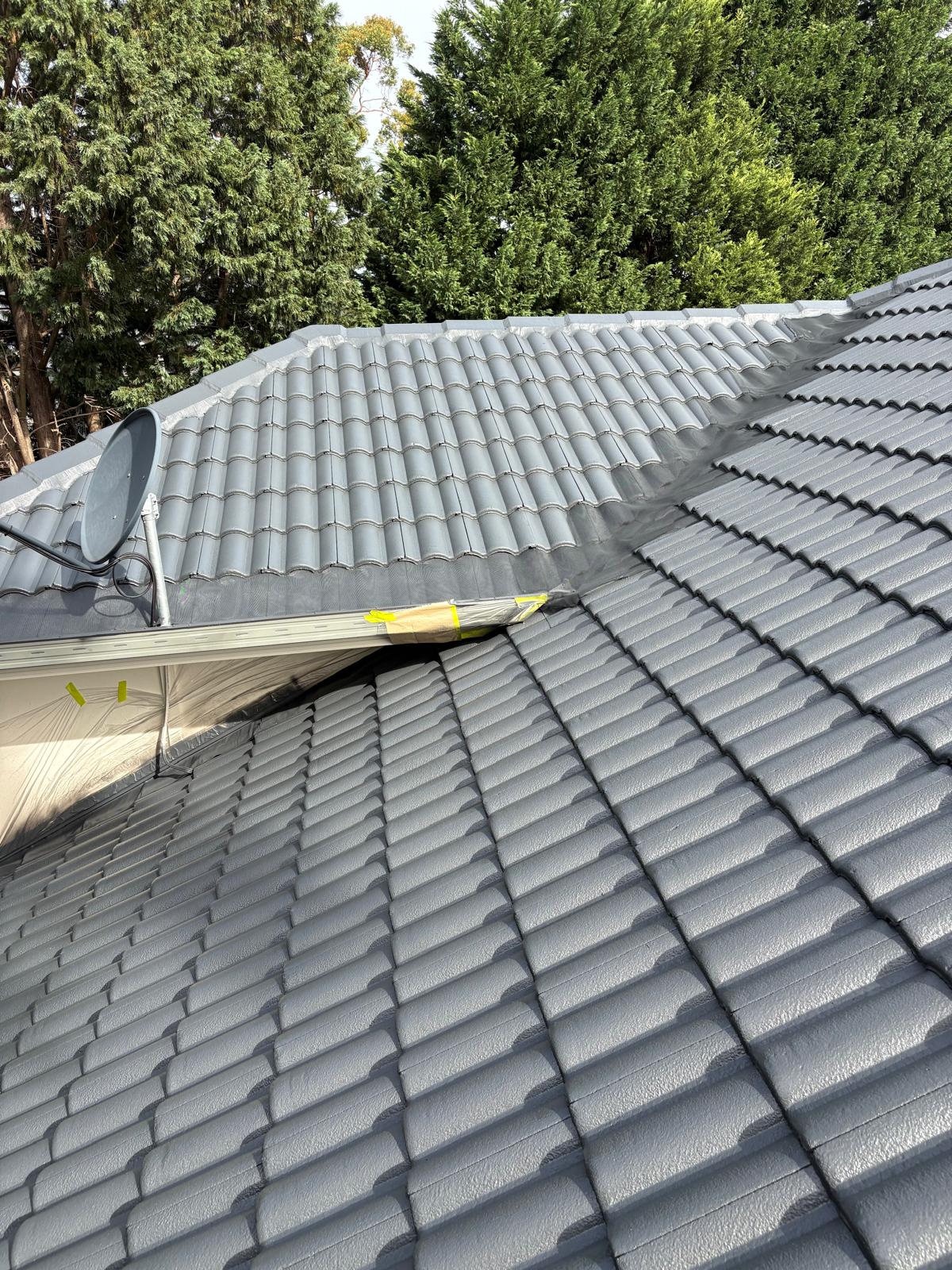
The Roof Restoration Process: What Actually Happens
This is the part most roofing websites gloss over with a dot point list. Here’s what a proper, professional roof restoration on a Central Coast home actually involves, from start to finish.
Step 1: Thorough Roof Inspection
Before any work starts, an experienced eye goes over every square metre of your roof. Tiles are checked for cracks, chips, and displacement. Ridge caps are examined. Valleys, flashings, and gutters are assessed. The underside of the roof (visible from the manhole) is checked for water ingress and timber damage.
This step determines whether you need a targeted repair, a full restoration, or something in between. An honest assessment of your specific situation is worth more than any generic price guide — and at Bass Roof Restoration, a no-obligation inspection comes free.
Step 2: High-Pressure Cleaning
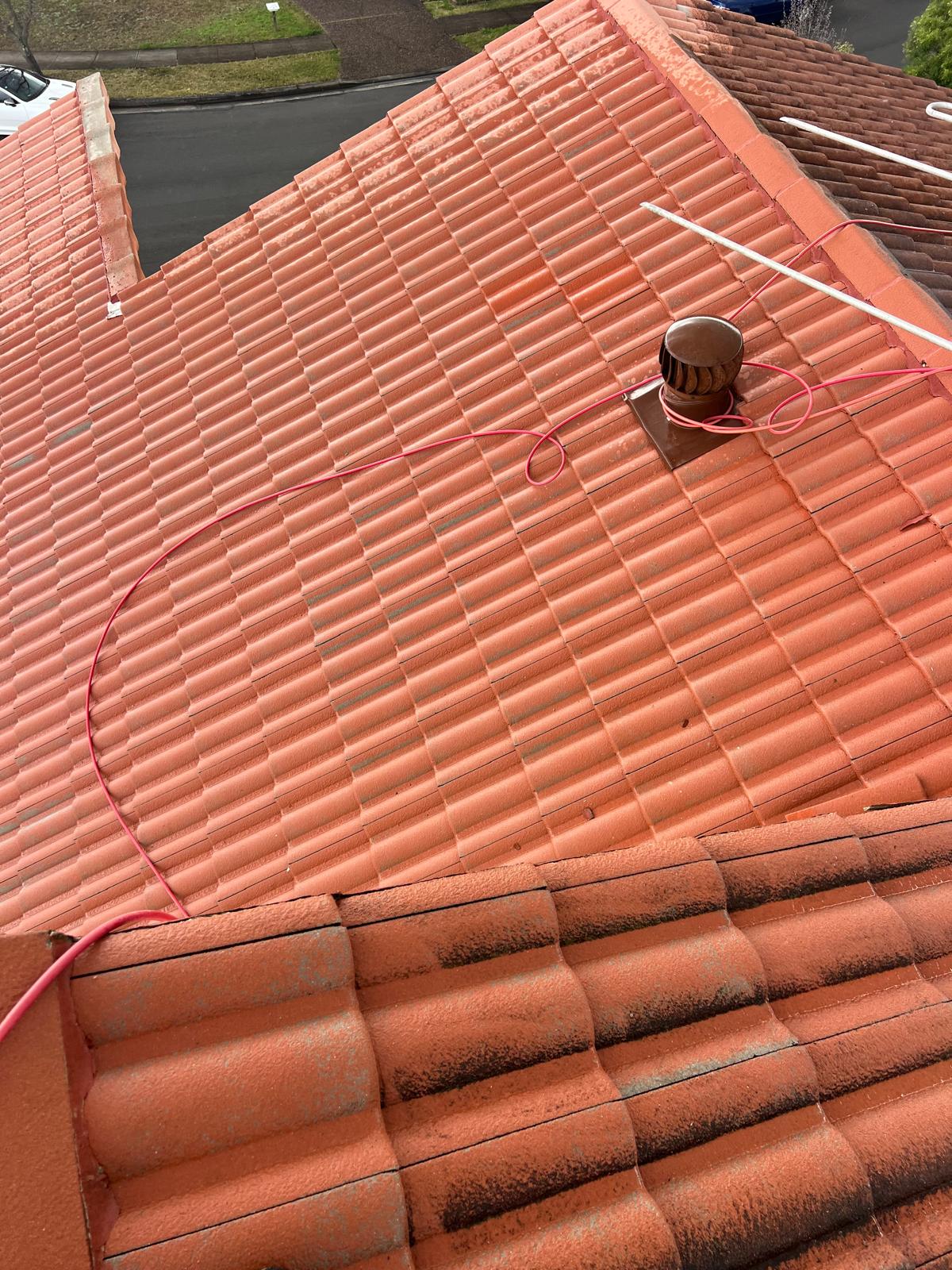
The entire roof surface is cleaned using professional-grade high-pressure equipment to strip off years of lichen, algae, moss, dirt, and debris. This isn’t just about making it look clean — applying any coating or primer over a dirty or biologically contaminated surface is a waste of money. The coating won’t bond properly and you’ll be doing it again in three years.
This stage also exposes damage that wasn’t visible under the grime — cracks, loose tiles, and compromised mortar that the pressure wash reveals for the next stage.
Step 3: Tile Repairs and Replacement
Every damaged, cracked, slipped, or porous tile is addressed before coatings go anywhere near it. For cement tile roofs, this might mean sourcing matching replacement tiles (which can be tricky on older profiles — another reason to use a roofer who knows the local supply chain). For terracotta tile roofs, which are more fragile and require careful handling, damaged tiles are replaced with colour-matched alternatives wherever possible.
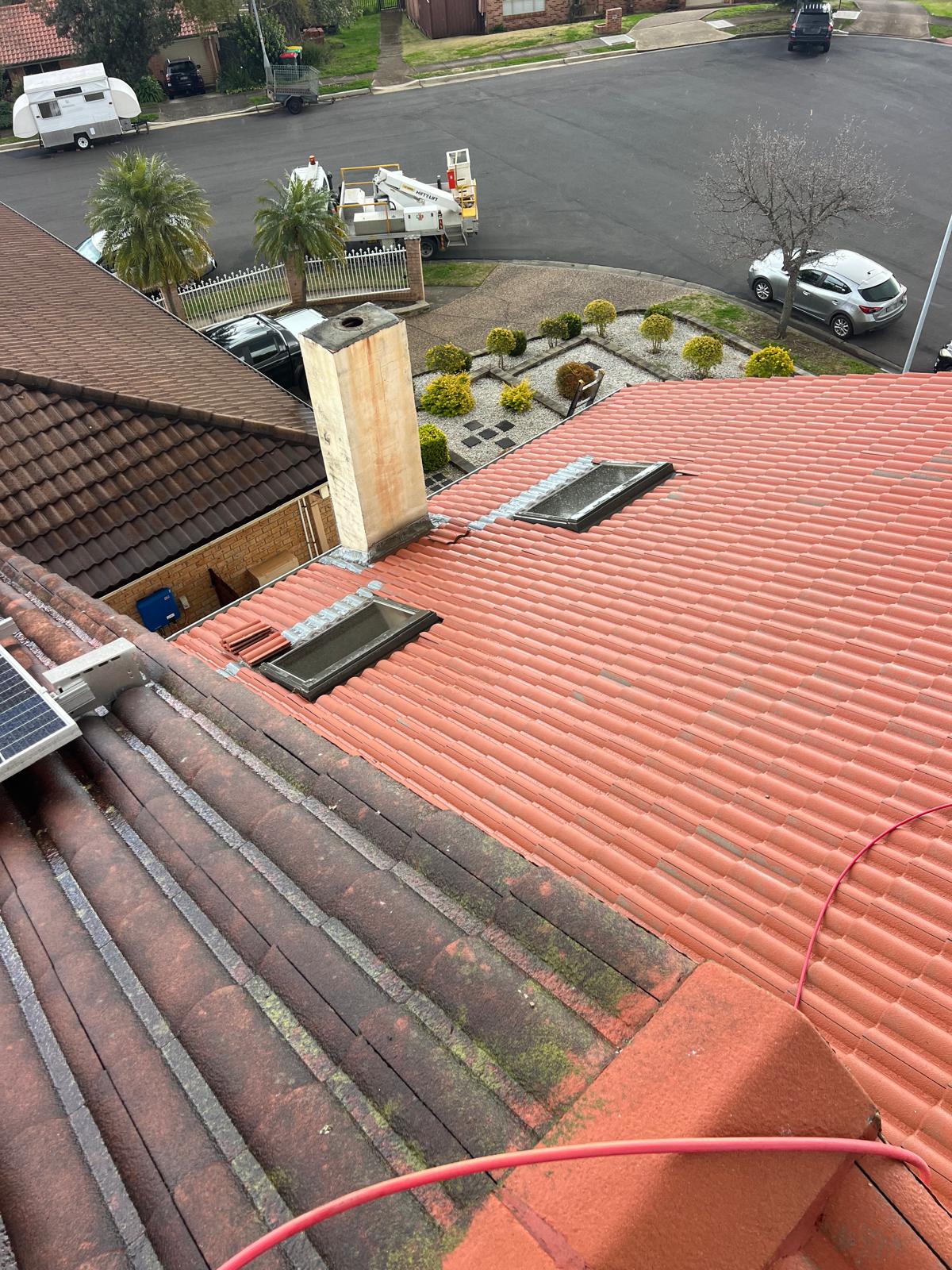
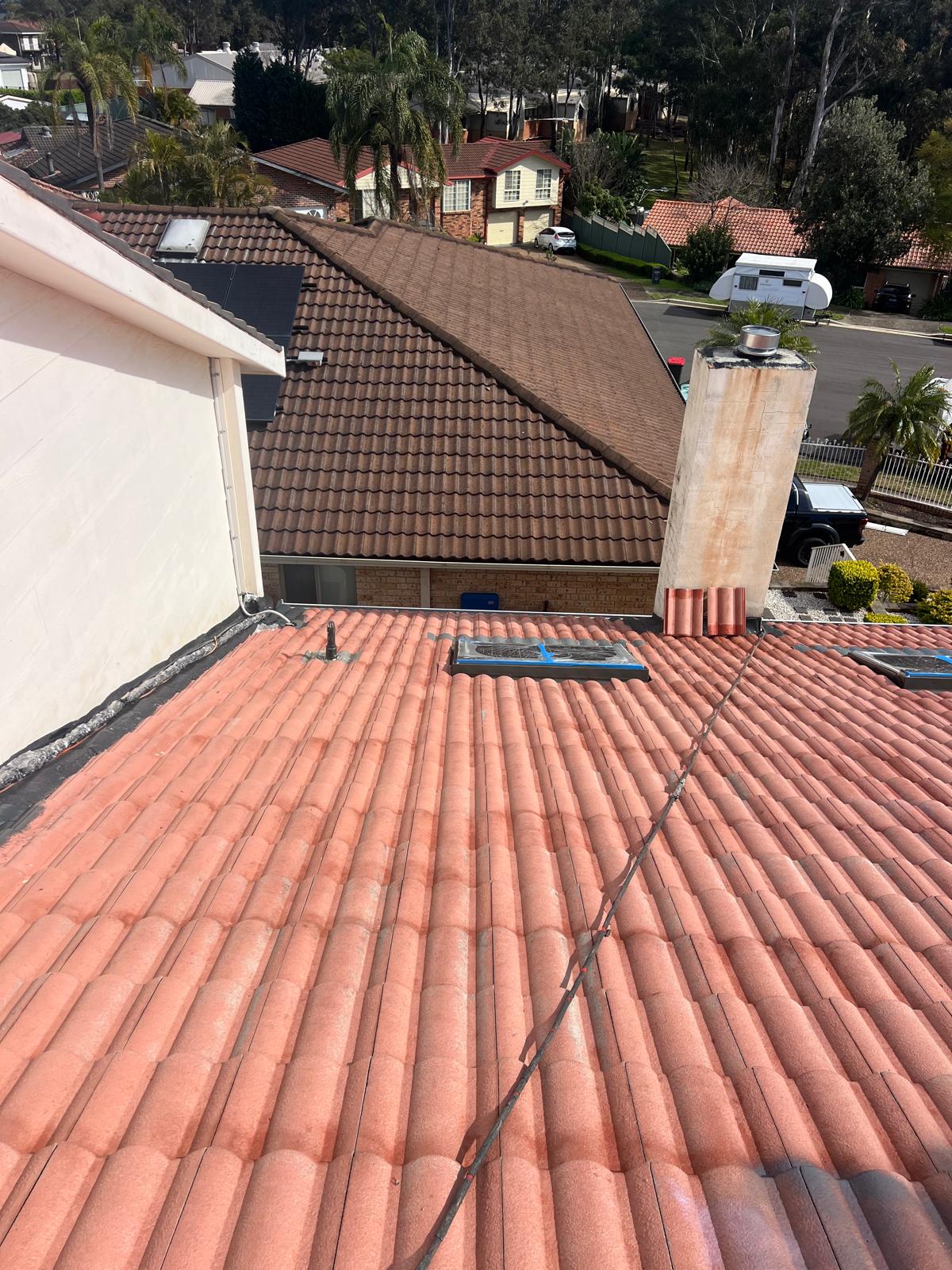
Valleys and flashings are inspected and resealed or replaced if they’ve deteriorated. This is where a lot of leaks actually originate — the flashings around chimneys, skylights, and roof edges degrade over time and need proper attention, not a dab of silicone.
Step 4: Re-bedding and Re-pointing Ridge Caps
This is arguably the most important structural element of a tile roof restoration, and the one most often skimped on by operators trying to undercut on price.
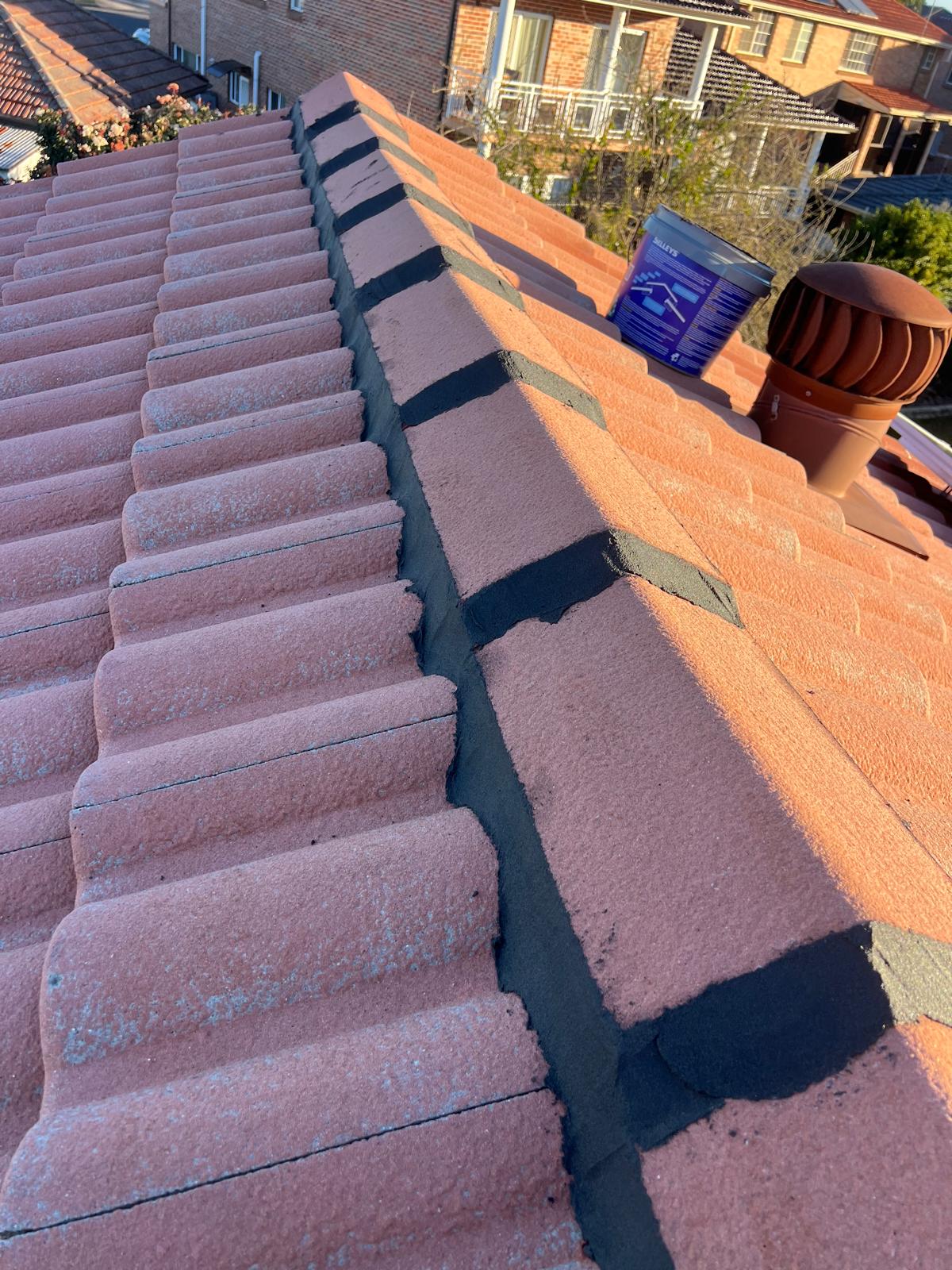
Re-bedding means removing the old mortar bed from the ridge cap tiles and laying fresh flexible bedding compound — this is what holds the ridge tiles down against the roof structure. Old, rigid cement bedding cracks and crumbles; modern flexible bedding moves with thermal expansion without breaking.
Re-pointing applies a flexible pointing compound over the bedding to seal the joins. This is what keeps wind-driven rain out of the ridge cap junction and prevents water from tracking down under the tiles.
If a roofing quote doesn’t mention re-bedding and re-pointing for a tile roof restoration — ask why. You want both.
Step 5: Primer Application
A quality primer is applied across the entire cleaned and repaired tile surface. The primer prepares the tile for the topcoat, improves adhesion dramatically, and provides an initial barrier against moisture penetration. Skipping the primer to save time is a false economy that halves the effective life of the coating above it.
Step 6: Roof Painting — Two Coat Topcoat System
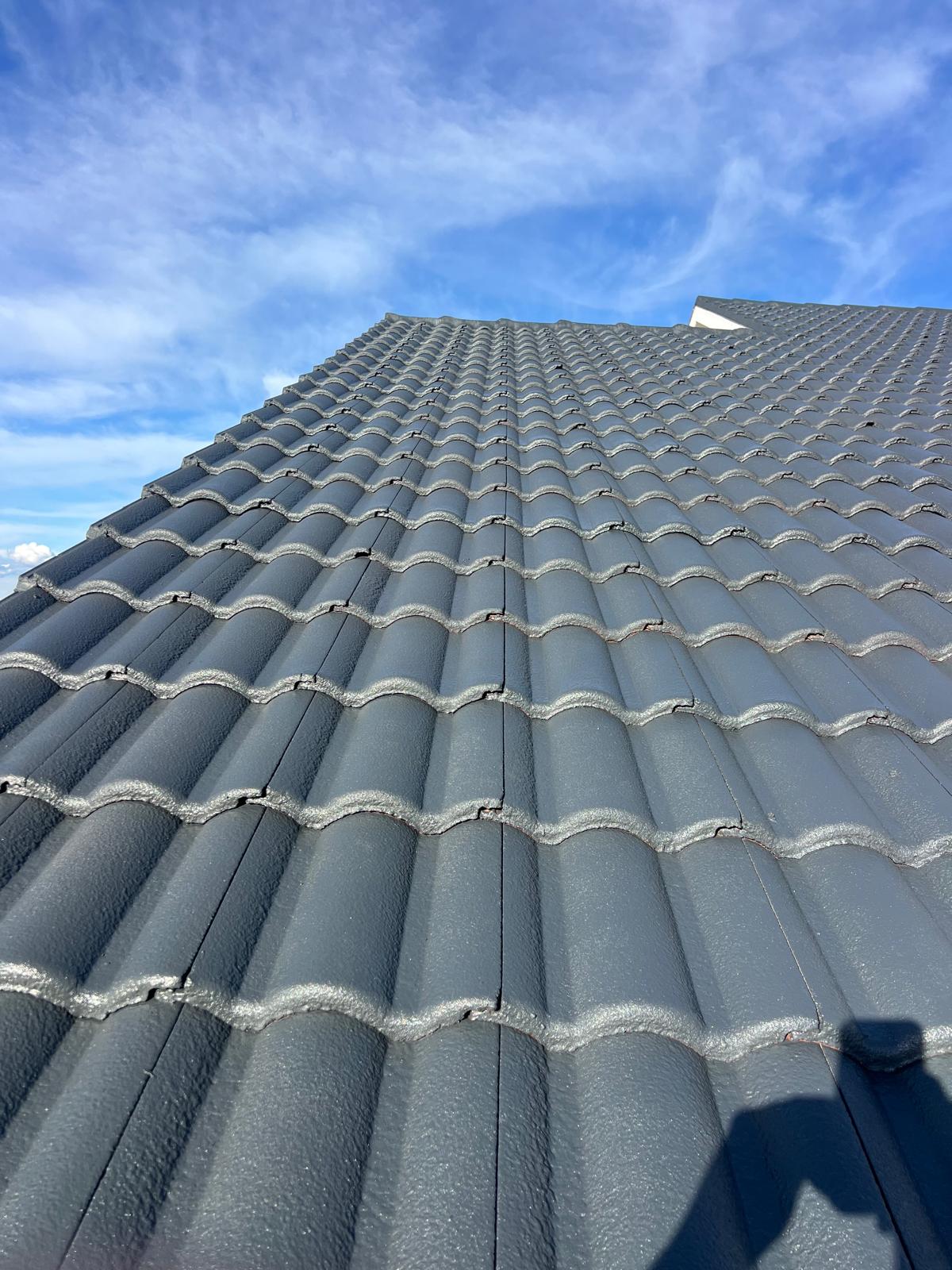
Two coats of high-grade roof membrane or coating are applied in the colour of your choice. Quality products specifically formulated for Australian UV conditions are the standard — at Bass Roof Restoration, we use proven materials that hold up to the Central Coast’s coastal and UV challenges and back the work with a 12-year warranty.
This is also your chance to completely change the colour of your home’s roof. Heading from a faded terracotta to a modern Basalt or Monument? A completely different look for your property without the cost of a full replacement. Not sure what colour suits your home? Our online colour picker tool lets you visualise different roof colours before committing to anything.
Most Central Coast restorations are completed in two to three days depending on weather. You can stay in your home throughout — the crew works entirely from the exterior.
Step 7: Clean-up and Final Inspection
A professional crew cleans up after themselves — gutters are rinsed, paths and windows cleaned of any overspray, and debris removed from the property. A final walkthrough confirms every element of the scope is complete.
Want to see what finished jobs look like? Our work portfolio shows real Central Coast roofs before and after, across different tile types and colours.
Roof Restoration Cost on the Central Coast in 2026: What to Budget
Honest answer: it depends on your specific roof. But here are real-world ranges you can use to budget.
For a standard single-storey Central Coast home, a full roof restoration — including cleaning, repairs, re-bedding and re-pointing, primer and two topcoats — typically costs:
Small home (under 120m²): $3,500–$5,500 Average 3-bedroom home (150–180m²): $5,500–$8,500 Larger home or more complex roofline (200m²+): $8,500–$12,000+
Per square metre pricing generally sits between $25–$50, depending on tile type, current condition, and access.
What pushes costs up:
- Extensive tile replacement (more than a handful of tiles)
- Steep roof pitch — increases safety requirements and slows the job
- Significant re-bedding work on a heavily deteriorated ridge system
- Two-storey properties
- Coastal properties with heavy biological growth requiring more aggressive cleaning
Compared to full replacement, restoration is dramatically more cost-effective. A full Colorbond re-roof on a typical Central Coast home runs $13,000–$25,000 installed. A terracotta or cement tile replacement can be similar or higher. Restoration at $5,000–$9,000 extends your existing roof’s life by 10–15 years at roughly one-third the cost.
If your roof is structurally sound — no damaged battens or trusses, no widespread tile failure — restoration is almost always the smarter financial call.
Affordable Roofing on the Central Coast: Getting Value Without Getting Burned
A few things to know before you pick up the phone:
Get written, itemised quotes. A quote that says “full restoration — $X” is not a quote, it’s a number. Ask what’s specifically included: cleaning, tile replacement (up to how many?), re-bedding, re-pointing, primer, topcoat (how many coats?), warranty, clean-up. Compare like for like.
Check the warranty. A 12-year warranty on a roof restoration isn’t just a nice marketing line — it’s the contractor putting their reputation on the line. Ask for it in writing.
Don’t defer the small stuff. A targeted roof repair for a couple of cracked tiles and a failed flashing might cost $500–$1,500. Left alone for another two years, the resulting water damage could cost five times that. The maths on early intervention always wins.
Combine jobs. If your gutters need replacing at the same time as your roof is being restored, doing them together saves on mobilisation costs. Fascias and gutters done alongside a roof restoration is common practice and usually gives you a better overall price than treating them as separate jobs.
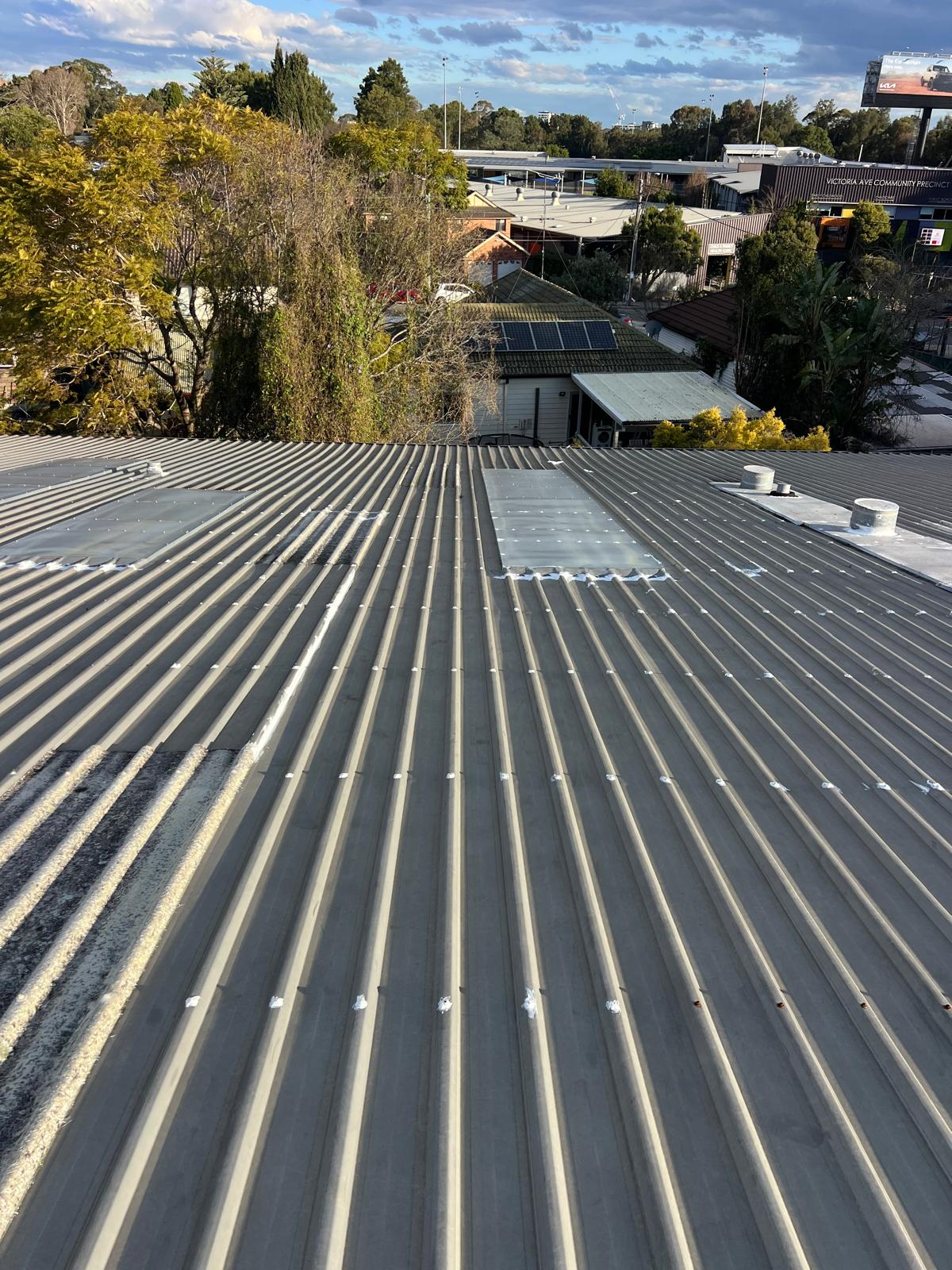
Colorbond Replacement: When Restoration Isn’t Enough
Sometimes a roof has reached the point where restoration is throwing good money after bad. An honest roofer will tell you when that’s the case.
The situation that typically calls for a full Colorbond metal roof replacement rather than tile restoration:
- Tiles are extensively cracked or broken across the whole roof, not just isolated sections
- The underlay has failed and water is getting into the roof cavity regardless of surface condition
- Structural damage to battens or rafters means the tile system can’t be reliably re-secured
- The roof has been patched and restored multiple times and is no longer responding well
Colorbond is an excellent choice for a Central Coast re-roof — it’s lighter than tiles (which matters on older homes), handles salt air and coastal conditions well with the right specification, and the modern colour range is genuinely attractive. For homes near The Entrance, Bateau Bay, Blue Bay, or the lake foreshore areas, Colorbond with appropriate coastal-grade fixings is worth the conversation.
Affordable Roofing on the Central Coast: Getting Value Without Getting Burned
A few things to know before you pick up the phone:
Get written, itemised quotes. A quote that says “full restoration — $X” is not a quote, it’s a number. Ask what’s specifically included: cleaning, tile replacement (up to how many?), re-bedding, re-pointing, primer, topcoat (how many coats?), warranty, clean-up. Compare like for like.
Check the warranty. A 12-year warranty on a roof restoration isn’t just a nice marketing line — it’s the contractor putting their reputation on the line. Ask for it in writing.
Don’t defer the small stuff. A targeted roof repair for a couple of cracked tiles and a failed flashing might cost $500–$1,500. Left alone for another two years, the resulting water damage could cost five times that. The maths on early intervention always wins.
Combine jobs. If your gutters need replacing at the same time as your roof is being restored, doing them together saves on mobilisation costs. Fascias and gutters done alongside a roof restoration is common practice and usually gives you a better overall price than treating them as separate jobs.
Why Choose Bass Roof Restoration for Your Central Coast Roof?
We’re a family-owned roofing business and we’ve built our reputation job by job across The Entrance, Gosford, Terrigal, Bateau Bay, Toukley, Wyong, and the wider Central Coast. Here’s what that means in practice:
12-year warranty on our restoration work — backed in writing.
Full range of roofing services under one roof: terracotta restoration, cement tile restoration, roof painting, roof cleaning, Colorbond replacement, repairs, and fascia and gutter work. You deal with one team, not multiple contractors.
Honest advice. We tell you what your roof actually needs — whether that’s a full restoration, a targeted repair, or just a clean. We’re not in the business of overselling.
Quality materials and methods. We use premium coatings and materials suited to Central Coast coastal conditions, applied properly. That’s the difference between a job that lasts 12+ years and one you’re revisiting in four.
Free, no-obligation quotes. Book an inspection and we’ll give you a written quote that spells out exactly what’s included.
Ready to Sort Your Roof?
Whether it’s a nagging leak that appears every time it rains, a faded and tired-looking roof that’s dragging down the kerb appeal, or you simply haven’t had it looked at in years — we’re here to help.
Call 0450 904 992 or visit bassroofrestoration.com.au to book your free roof inspection. We’ll give you a straight assessment of what your roof needs and a clear quote — no pressure, no surprises.
Browse our full range of Central Coast roofing services to see everything we offer, and check out real completed jobs across the region before you decide.
Your roof works hard every day. Give it the attention it deserves — before the next east coast low rolls in and makes the decision for you.
Bass Roof Restoration is a family-owned roofing business servicing The Entrance, Gosford, Terrigal, Bateau Bay, Toukley, Wyong, and all Central Coast NSW. Licensed, fully insured, 12-year warranty on restoration work. Phone: 0450 904 992.