
By Bass Roof Restoration | Terracotta Roof Specialists, The Entrance & Central Coast NSW
There’s a particular kind of denial that Central Coast homeowners are very, very good at. You glance up at the roof, spot a few suspicious green patches spreading across the terracotta tiles like an uninvited houseguest, and think — yeah, I’ll deal with that later. Maybe after summer. Maybe after the footie season. Maybe never.
Here’s the thing: your terracotta roof doesn’t do “later.” It does now. And the longer you ignore those mossy tiles, cracked ridge caps, and crumbling repointing, the louder (and more expensive) the conversation gets.
This guide is for every Central Coast homeowner sitting under a terracotta roof right now, wondering whether it needs attention — and what proper terracotta roof restoration on the Central Coast actually involves. We’ll cover the what, the why, the how, and the “why didn’t I do this sooner?”
Why Terracotta Roofs Are a Big Deal on the Central Coast
Walk through Terrigal, Woy Woy, Gosford, or The Entrance, and you’ll see them everywhere — that distinctive warm orange-red tile roof sitting atop a home that’s been there since the ’70s, ’80s, or ’90s. Terracotta is one of the most popular roofing materials in Central Coast NSW, and for good reason.
The word terracotta literally means “baked earth.” These tiles are moulded from natural clay and kiln-fired to extraordinary hardness. A quality terracotta roof can last 50 to 75 years — outliving almost every other roofing type on the market. They’re naturally fire-resistant, provide excellent thermal insulation (keeping your home cooler in summer, warmer in winter), and they look brilliant when they’re in good nick.
The flip side? Terracotta is porous. That means it absorbs moisture. In the Central Coast’s coastal climate — with its humidity, salt air, and leafy surrounds — that porosity is a standing invitation for moss, lichen, algae, and mould to move right in. Over time, those organisms don’t just look bad; they actively eat away at your tiles. And once the glaze on older terracotta begins to de-laminate, water finds its way underneath — and then your ceiling finds out about it first.
The good news? Terracotta can be stripped back, cleaned, re-sealed, and restored to something genuinely impressive. That’s the whole point of professional terracotta roof cleaning and restoration on the Central Coast — and it’s a fraction of the cost of a full re-roof.
How to Know Your Terracotta Roof Needs Restoration
Your roof won’t send you an email. But it does send signals. Here are the ones you shouldn’t ignore:
Green or black patches on the tiles. That fuzzy green growth is moss; the darker staining is often lichen or algae. Both hold moisture against the tile surface and accelerate deterioration. Left untreated, they work their way into any existing hairline cracks.
Cracked, chipped, or displaced tiles. Even one broken tile is an open door for water. Once water gets under the tile layer, it can damage your roof deck, insulation, and eventually your ceiling and walls.
Crumbling or missing ridge cap mortar. The ridge caps running along the top of your roof are bedded in mortar and sealed with pointing compound. When that pointing starts to crack and fall away — which it will, given enough heat cycles and storms — your ridge caps can literally shift in strong winds. This is one of the most common causes of terracotta tile roof leaks on the Central Coast.
Faded or powdery tile surface. If the natural orange glow has given way to a chalky, washed-out look, the glaze and protective surface have broken down. The tile is now fully exposed.
Staining on interior ceilings. By the time you see a water stain on your ceiling, the problem has been developing on the roof for a while. This is the “your roof has been leaving you voicemails and you’ve ignored them all” stage.
Your roof is 10–20 years old and hasn’t been touched. Even a structurally sound terracotta roof needs a professional clean and restoration every 10 to 20 years to maintain its integrity.
If you’re ticking two or more of these boxes, it’s time to call in the terracotta roof specialists on the Central Coast.
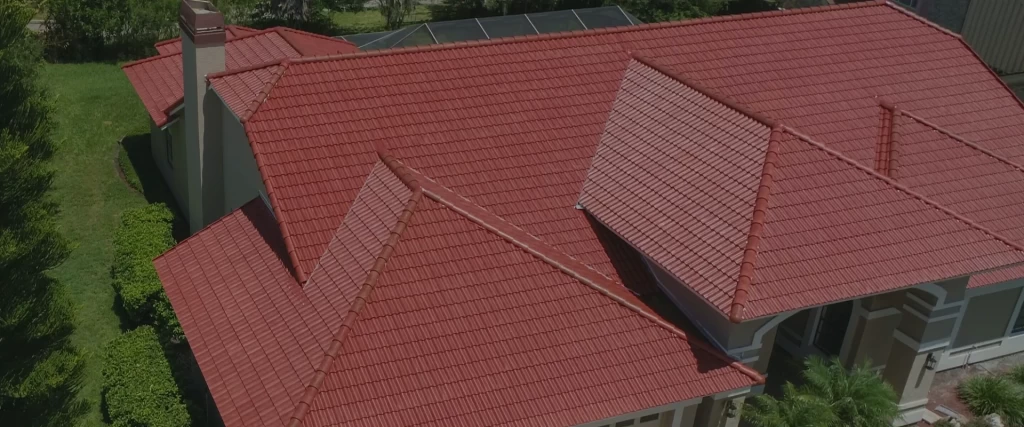
The Terracotta Roof Restoration Process — What Actually Happens?
This isn’t a weekend DIY project. Walking on terracotta tiles without proper training and equipment risks cracking the very tiles you’re trying to save, and working at height without the right safety gear is genuinely dangerous. Here’s what a professional terracotta roof restoration involves — step by step.
Step 1: Thorough Roof Inspection
Before a drop of water touches the roof, a qualified technician gets up there and inspects every section by hand. This means checking each tile for cracks, chips, and displacement — including hairline fractures that aren’t visible from the ground. They’ll also assess the ridge caps, bedding, pointing, valleys, and flashings around chimneys or skylights. This is where you find out exactly what your roof needs, not just what it looks like it needs.
At Bass Roof Restoration, the inspection is the foundation of every job. There’s no guesswork, no “she’ll be right” — just a clear, honest assessment of what’s required.
Step 2: Broken and Displaced Tile Replacement
Any cracked, broken, or dislodged tiles are replaced before cleaning begins. Trying to high-pressure clean around broken tiles is pointless — you’re just washing dirt into the gaps. Replacement tiles are matched as closely as possible to the existing profile.
Step 3: High-Pressure Cleaning
Once structural repairs are done, the full roof surface is high-pressure cleaned to strip away years of accumulated moss, lichen, algae, dirt, and old surface coatings. Gutters and downpipes are flushed out at the same time. The difference after a professional clean is often shocking — and sometimes the homeowner discovers the tiles look far better than expected once all that biological grime is gone.
This is a crucial stage of terracotta roof cleaning and restoration on the Central Coast — and it’s not something to rush or half-do. The cleanliness of the surface directly affects how well any sealer or coating bonds.
Step 4: Re-Bedding and Repointing Ridge Caps
This is the step that separates a proper restoration from a cosmetic touch-up. Ridge caps are re-bedded in fresh mortar where the original bedding has failed, and then re-pointed along their entire length using a flexible acrylic pointing compound. This creates a weathertight seal along the roof’s peak and dramatically reduces the risk of water ingress.
Many operators skip this step or do it poorly. A proper repoint done with the right compound should remain flexible and weatherproof for well over a decade.
Step 5: Terracotta Sealing
This is where terracotta restoration differs significantly from cement tile restoration. Terracotta requires a penetrating sealer — not just a surface coating — that soaks into the pores of the clay and creates a breathable, hydrophobic barrier from the inside out.
A quality terracotta roof sealing on the Central Coast does several things at once: it repels moisture, inhibits future moss and algae growth, deepens the natural colour of the tile, and extends the tile’s serviceable life by years. The sealed surface is also dramatically easier to clean going forward.
For homeowners who want a colour change or a uniform look across mismatched tiles, a specialist coating can be applied over the sealer — but unlike cement tiles, you don’t have to paint terracotta to restore it. The sealing step alone is often transformative.
Step 6: Site Clean-Up
Every piece of debris, broken tile, and spent material is removed. A professional crew leaves your property as clean as they found it — ideally cleaner.
For a look at what this process delivers in practice, browse the work portfolio and see the before-and-after results across Central Coast homes.
Terracotta vs. Cement Tiles — Why It Matters for Restoration
Not all tile roofs are the same, and the restoration approach needs to match the material. Terracotta and cement (concrete) tiles are often confused — even by homeowners who’ve lived under them for years.
Terracotta is a fired clay product. It’s harder, smoother, and has a natural glaze. Cement tiles are heavier, more porous, and their colour runs through a surface coating that fades over time. The sealing and coating products used for each are different, and so is the pressure applied during cleaning.
If you’ve got cement tiles rather than terracotta, that’s covered too — the team offers dedicated cement roof restoration across the Central Coast using the right materials and methods for that substrate.
Getting this wrong — using terracotta products on cement tiles, or vice versa — can cause adhesion failures, premature peeling, and wasted money. This is why it matters to work with specialists who know the difference, not generalists who treat all tiles the same.
What Happens If You Keep Ignoring It?
Let’s be direct: a neglected terracotta roof doesn’t stay neglected forever. Eventually, it forces a decision — usually an expensive one.
Moss and lichen hold moisture against the tile, causing micro-cracking that accelerates with every heat-cool cycle. Water that seeps under cracked or displaced tiles finds its way to your roof deck, then your insulation (now sodden and useless), then your ceiling. What starts as a couple of suspicious stains can become structural timber damage, mould in your ceiling cavity, and a repair bill that makes a full restoration look like a bargain.
There’s also the property value angle. On the Central Coast — where real estate is serious business — a tired, moss-covered roof signals deferred maintenance to any prospective buyer or bank valuer. A professionally restored roof, on the other hand, immediately lifts street appeal and can directly influence a sale price or valuation. Several homeowners have had their roofs restored specifically before listing, and the result showed at auction.
And for the energy-conscious among us: a sealed, intact terracotta roof provides measurably better insulation than one riddled with gaps, displaced tiles, and compromised pointing. Lower heating and cooling costs over years of ownership can represent genuine savings — especially given what power bills look like these days.
Why Central Coast Homeowners Choose Bass Roof Restoration
There’s no shortage of roofing companies operating on the Central Coast. So why does it matter who you call?
Bass Roof Restoration is a family-owned Australian business based at The Entrance — right here on the Central Coast. That means local knowledge, local accountability, and a team that understands the specific conditions your roof deals with: the coastal salt air, the humidity, the summer storms, the leaf litter from the bush, and the particular challenges that terracotta presents in this environment.
The work comes with a 12-year warranty — one of the strongest in the market — and every job is done to full safety compliance with the right insurance and equipment. No sub-contractors rotating through. No hard-sell tactics. Just a proper inspection, honest advice on what’s needed (and what’s not), a clear quote, and a team that shows up when they say they will.
The full range of roof services across the Central Coast includes terracotta and cement tile restoration, roof painting, roof repairs, roof cleaning, Colorbond metal roof replacement, and fascia and gutter replacement — meaning whatever your roof turns out to need, it’s handled under one roof (so to speak).
Frequently Asked Questions
How long does a terracotta roof restoration take? Most residential jobs on the Central Coast take 2 to 3 days, depending on roof size, the extent of repairs needed, and weather. Larger or more complex roofs may take longer.
How often should a terracotta roof be restored? Every 10 to 20 years as a general guide, though this varies by exposure, the quality of previous maintenance, and the age of the tiles. If your roof has never been professionally cleaned or sealed, it likely needs attention sooner.
Can I paint my terracotta roof? Yes, but it’s not always necessary. A quality penetrating sealer alone can restore the tile’s function and appearance. If you want to change colour or deal with heavily mismatched tiles, a coating over the sealer is an option. The team will advise which approach makes sense for your specific roof.
Is terracotta restoration cheaper than replacing the roof? Significantly, yes. A full re-roof involves stripping tiles, replacing the sarking and battens, and re-tiling from scratch. A restoration preserves the existing tile system and costs a fraction of replacement — provided the tiles are structurally sound, which is exactly what the inspection determines.
Do you service all areas of the Central Coast? Yes — from Gosford to Wyong, Terrigal to Toukley, Woy Woy to Budgewoi. If you’re on the Central Coast NSW, they can reach you.
It’s Time to Have a Proper Look
If your terracotta roof has been silently dealing with moss, loose ridge caps, cracked tiles, or compromised pointing — it’s had enough patience. The Central Coast’s climate is beautiful, but it is not kind to neglected roofing.
A professional inspection costs nothing. A proper terracotta roof restoration on the Central Coast is an investment that pays for itself in avoided repairs, lower energy bills, and a home that looks the part.
Call Bass Roof Restoration on 0450 504 952 for a free, no-obligation quote. No pressure, no upsell — just straight answers about what your roof actually needs.
Because the sooner you listen to what it’s telling you, the less expensive the conversation gets.
Bass Roof Restoration | The Entrance North, NSW 2261 | Serving the entire Central Coast NSW Terracotta Roof Restoration · Cement Roof Restoration · Roof Cleaning · Roof Repairs · Roof Painting · Colorbond Replacement · Fascias & Gutters